
Are you tired of sterile, all-white bathrooms that lack personality? You might be craving a space that feels warm, fun, and completely unique. The 70s aesthetic, with its earthy tones and playful shapes, offers the perfect escape from modern minimalism. It’s a style that invites you to be bold and express yourself through color and texture.
Bringing this look into your home can feel a little intimidating, as you want it to feel fresh, not dated. The key is choosing the right elements to create an authentic vibe. A successful 70s bathroom revival is all about celebrating character and creating a cozy retreat. This guide will give you plenty of ideas to get started on your own groovy sanctuary.
1. Avocado Green Subway Tiles
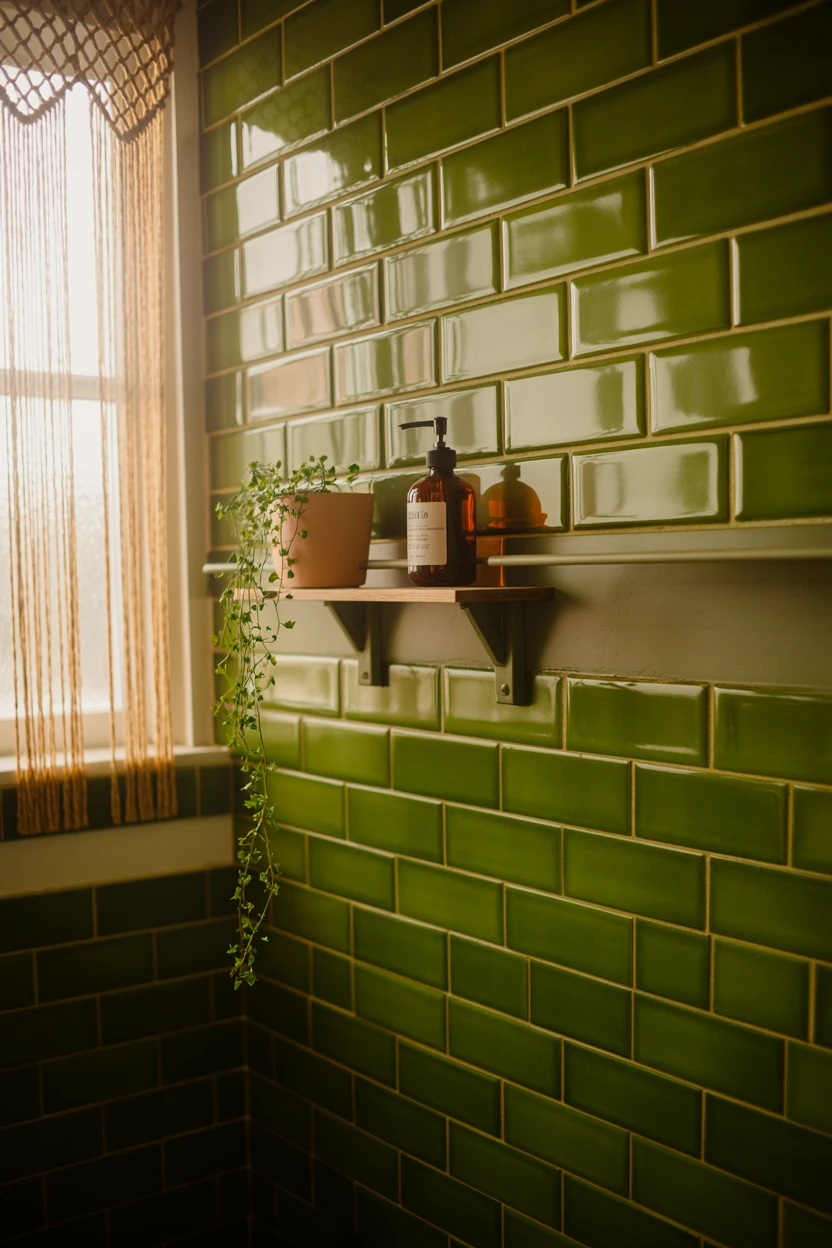
Nothing screams 70s quite like avocado green. This iconic color instantly sets a retro mood. Using it in a classic subway tile format gives it a slightly modern twist while staying true to the era.
Choose a tile with a high-gloss finish. This reflects light around the room, preventing the dark color from feeling too heavy. Pair it with a contrasting white or off-white grout to make the shape of each tile pop.
This look works beautifully for a shower surround or as a wainscoting feature around the entire room. To complete this 70s bathroom design, add accents of warm wood and brass. The combination of green, wood, and metal feels authentic and thoughtfully curated.
Consider using these tiles on just one feature wall if you’re worried about overwhelming the space. Behind the vanity is a great spot to add this splash of color. It creates a focal point without committing the entire room to the bold green hue.
2. A Sunken Conversation Pit Tub
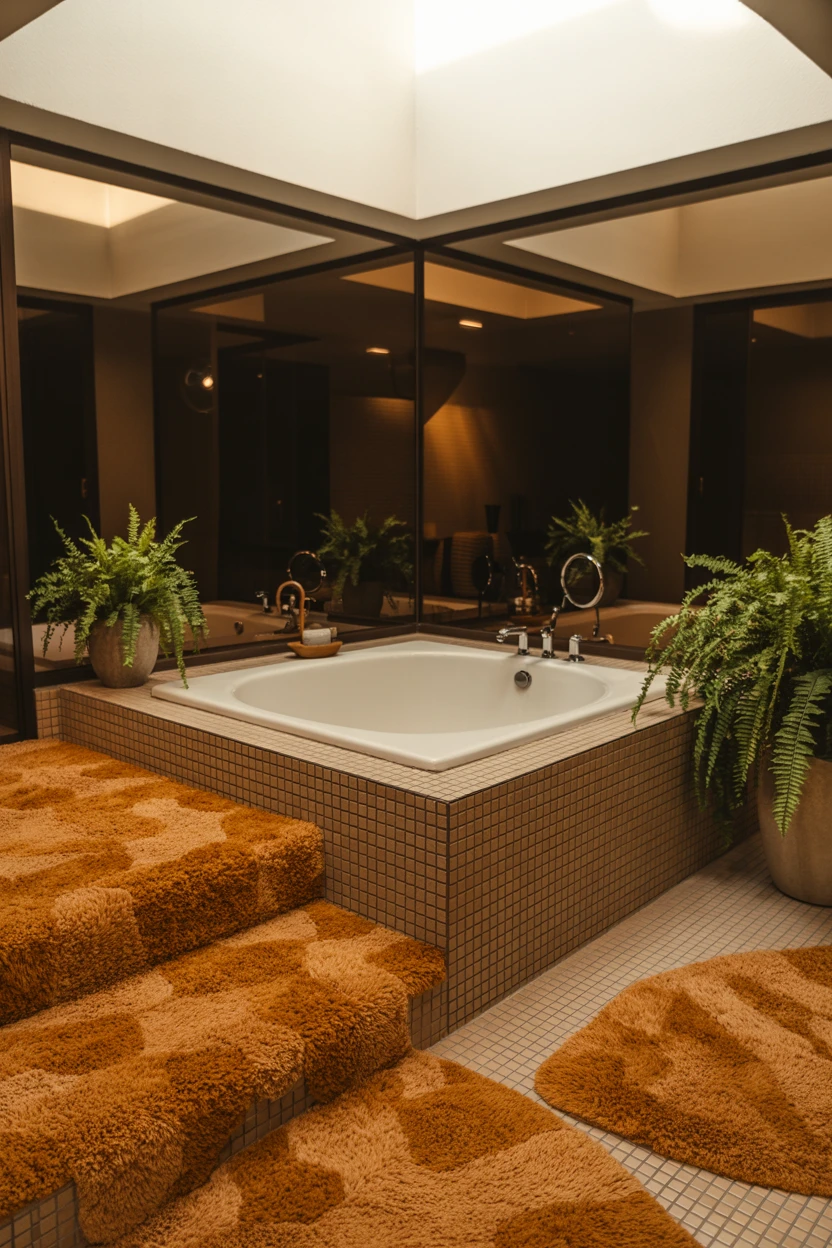
For the ultimate in 70s luxury, a sunken tub is a must-have. This fixture turns a simple bath into an immersive, spa-like experience. It creates a focal point that is both dramatic and inviting, encouraging you to relax and unwind.
The key is to surround the tub with period-appropriate materials. Think small mosaic tiles in shades of brown or orange for the tub interior and surround. You can even add a plush shag rug on the floor next to it for that classic “conversation pit” feel.
This idea requires significant plumbing and structural work, so it’s best for a major renovation. However, the payoff is a truly unique 70s bathroom that feels like a personal retreat. Pair it with dimmable, warm lighting to enhance the cozy, intimate atmosphere.
Large potted plants like ferns or monsteras placed around the tub will complete the look. The greenery adds an organic element that was very popular during the era. It softens the hard lines of the tile and makes the space feel like a hidden oasis.
3. Harvest Gold Hexagon Floor Tiles
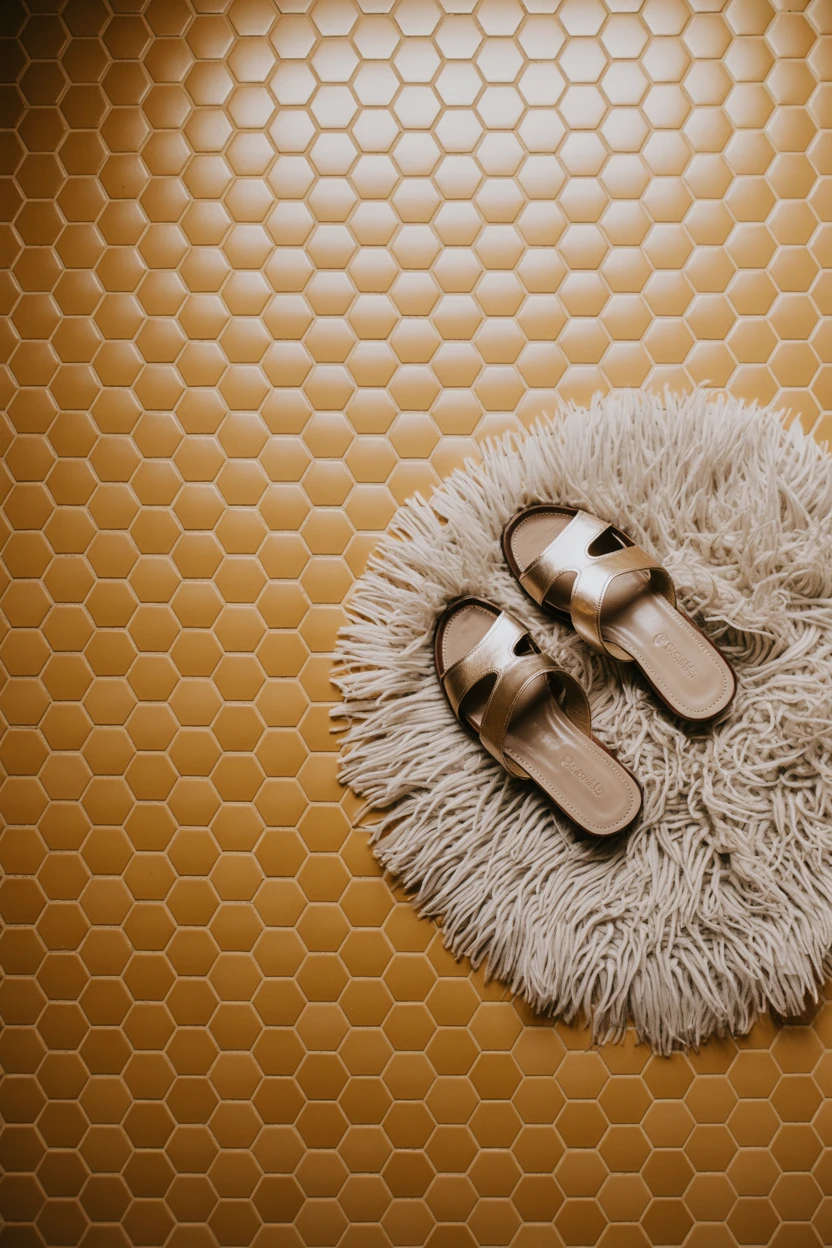
Alongside avocado green, harvest gold was a defining color of the 70s. Using it on the floor with a hexagon tile adds a fun, geometric pattern that feels both retro and current. The honeycomb shape is playful and dynamic.
Opt for a matte finish for the floor tiles. This gives them a more organic, earthy feel and is also more practical for a wet environment. A slightly larger hex tile works well to make a small bathroom feel more spacious.
This sunny, warm color provides a fantastic foundation for your 70s bathroom revival. It pairs wonderfully with dark wood vanities, white walls, and chrome fixtures. The gold brightens the space and gives it a cheerful, welcoming energy.
To keep the look from feeling overwhelming, balance the bold floor with more neutral elements on the walls. Simple white or cream paint will let the harvest gold tiles be the star of the show. Add texture with a rattan laundry basket or a macrame wall hanging.
A space that feels like a warm, sun-drenched memory from a forgotten photograph.
4. Floating Dark Wood Vanity
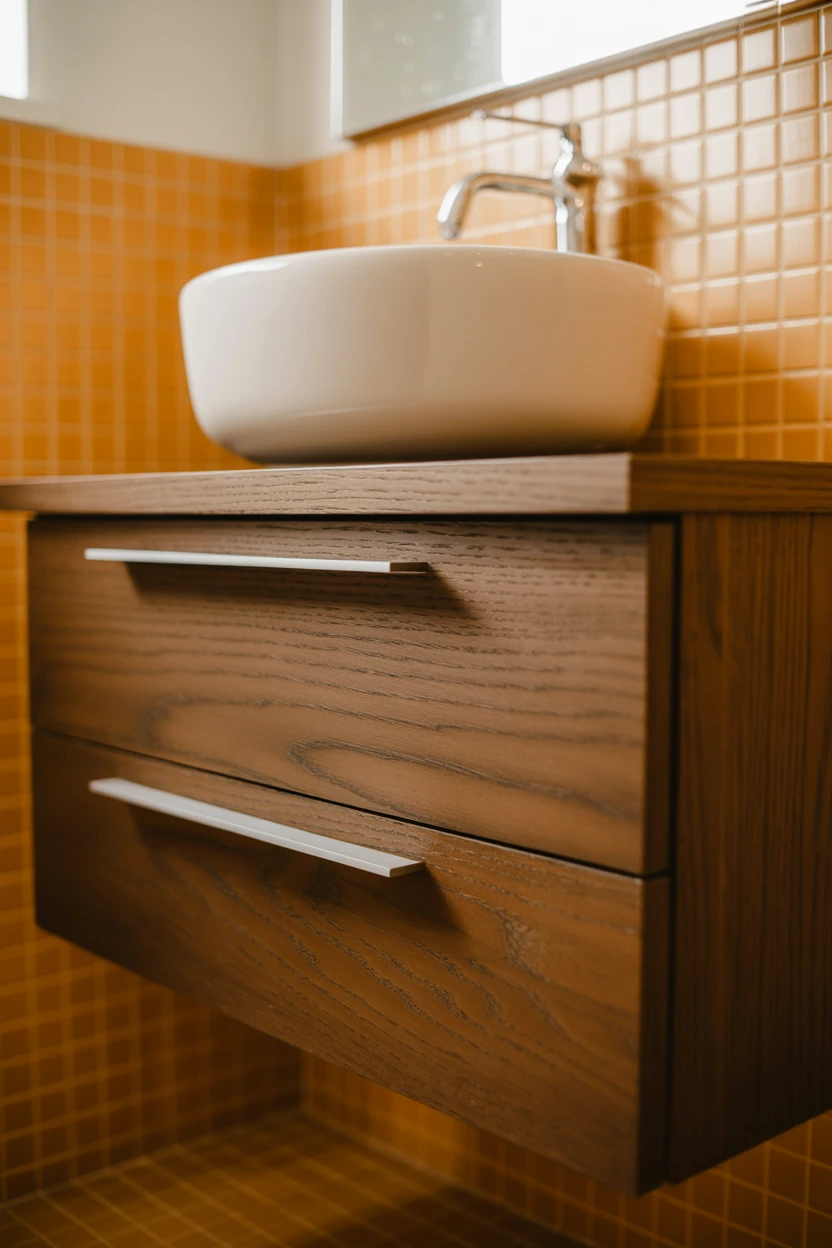
The 70s were all about natural materials, and a dark wood vanity is a perfect way to bring this element in. Teak, walnut, or other rich-toned woods add warmth and organic texture. A floating design keeps it from feeling too heavy and adds a touch of modern sleekness.
Look for a vanity with simple, clean lines and minimal hardware. The focus should be on the beauty of the wood grain. This style of furniture was common in the era, emphasizing functional design and natural materials.
A floating vanity also makes a small bathroom feel larger by showing more floor space. This is a practical benefit that complements the aesthetic choice. It creates an open, airy feeling that balances some of the heavier colors and textures of a classic 70s bathroom.
Pair the dark wood with a simple white countertop and a vessel or drop-in sink. This contrast makes the wood stand out. For fixtures, either polished chrome or warm brass will work beautifully with the deep wood tones.
5. Bold Floral Patterned Tiles
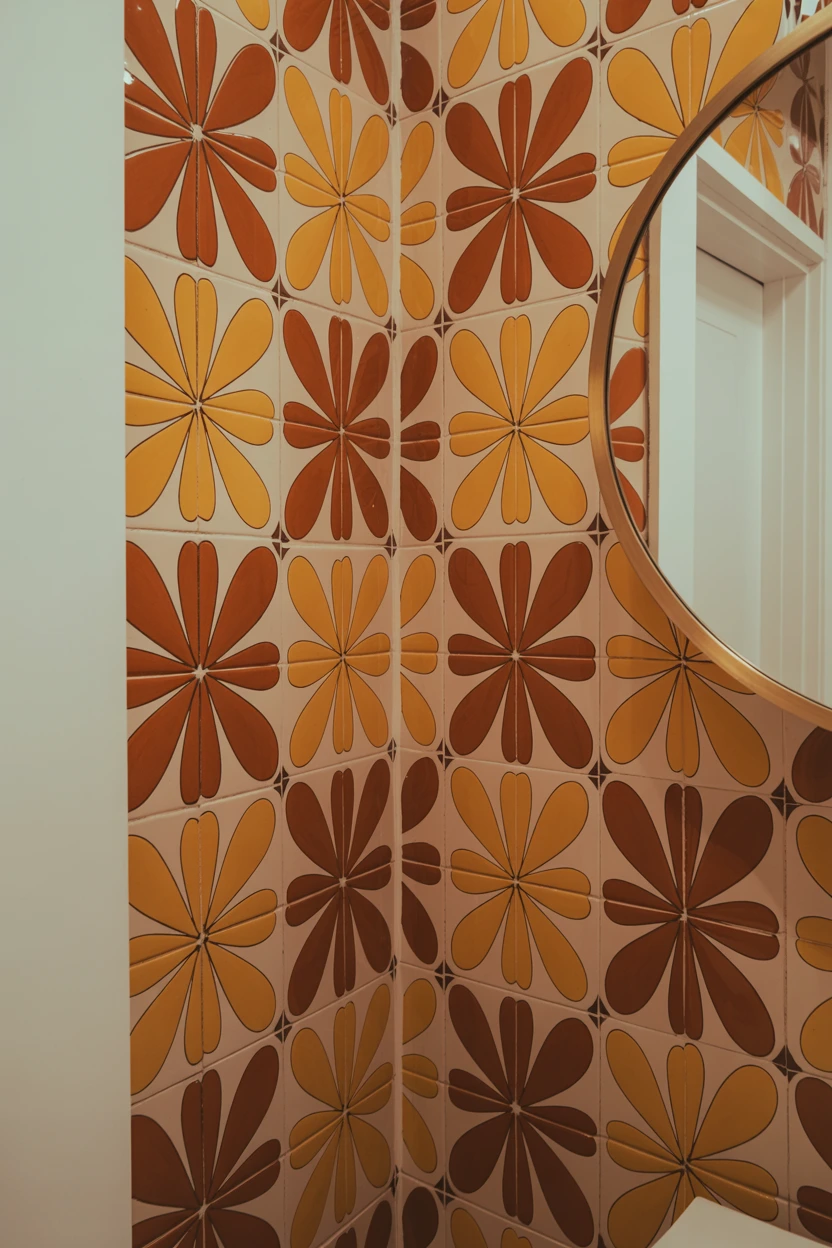
The 70s were not afraid of pattern. A bold, stylized floral tile is a fantastic way to inject personality and fun into your bathroom design. Look for large-scale patterns with groovy, rounded flower shapes.
The key is to use these tiles strategically. Tiling an entire room with a busy pattern can be overwhelming. Instead, use them on a single accent wall, like the one behind the vanity, or on the floor to make a big statement.
Choose a color palette that feels authentic to the era. Combinations like orange and brown, or yellow and green, work perfectly. This feature will become the centerpiece of your 70s bathroom, so let it shine.
Keep the other elements in the room relatively simple to balance the bold pattern. A plain white or wood vanity, simple fixtures, and solid-colored towels will complement the tiles without competing for attention. This allows the floral design to be the hero of the space.
6. Spherical Globe Sconce Lights
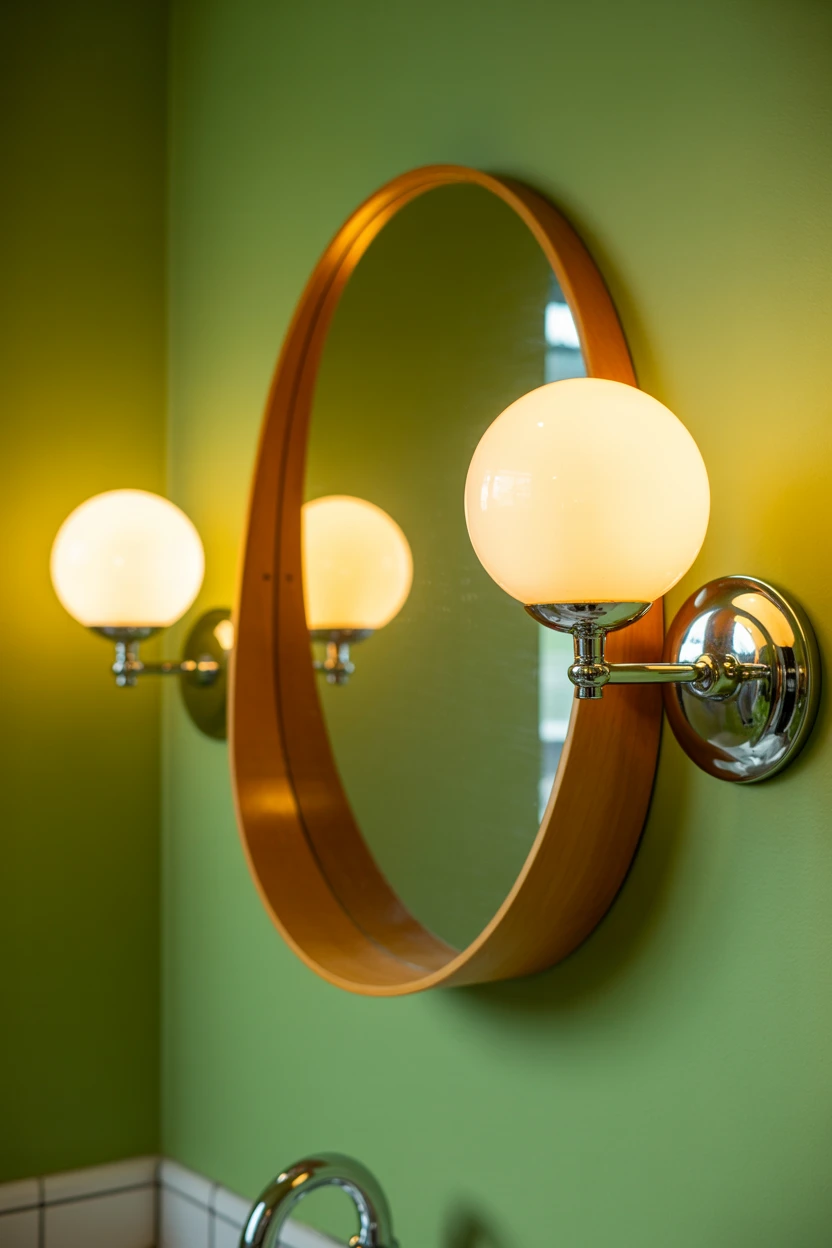
Lighting is crucial for setting the right mood, and globe-shaped lights are quintessentially 70s. Their simple, geometric form is both futuristic and retro. They provide a soft, diffused light that is flattering and calm.
Place a globe sconce on either side of the bathroom mirror. This provides even, shadow-free lighting for your face. Look for fixtures with a polished chrome or warm brass base to match the other metals in your room.
You can choose between clear glass globes for a brighter look or milky or smoked glass for a softer, more ambient glow. Milky glass is particularly effective at creating a gentle, relaxing atmosphere, perfect for a bathroom sanctuary.
This simple fixture is a powerful element in your 70s bathroom revival. It’s an easy update that makes a huge impact on the overall feel of the space. It’s a detail that shows a thoughtful approach to recreating the era’s design language.
It’s about embracing bold character over quiet, minimalist perfection.
7. Brown and Cream Checkerboard Floor
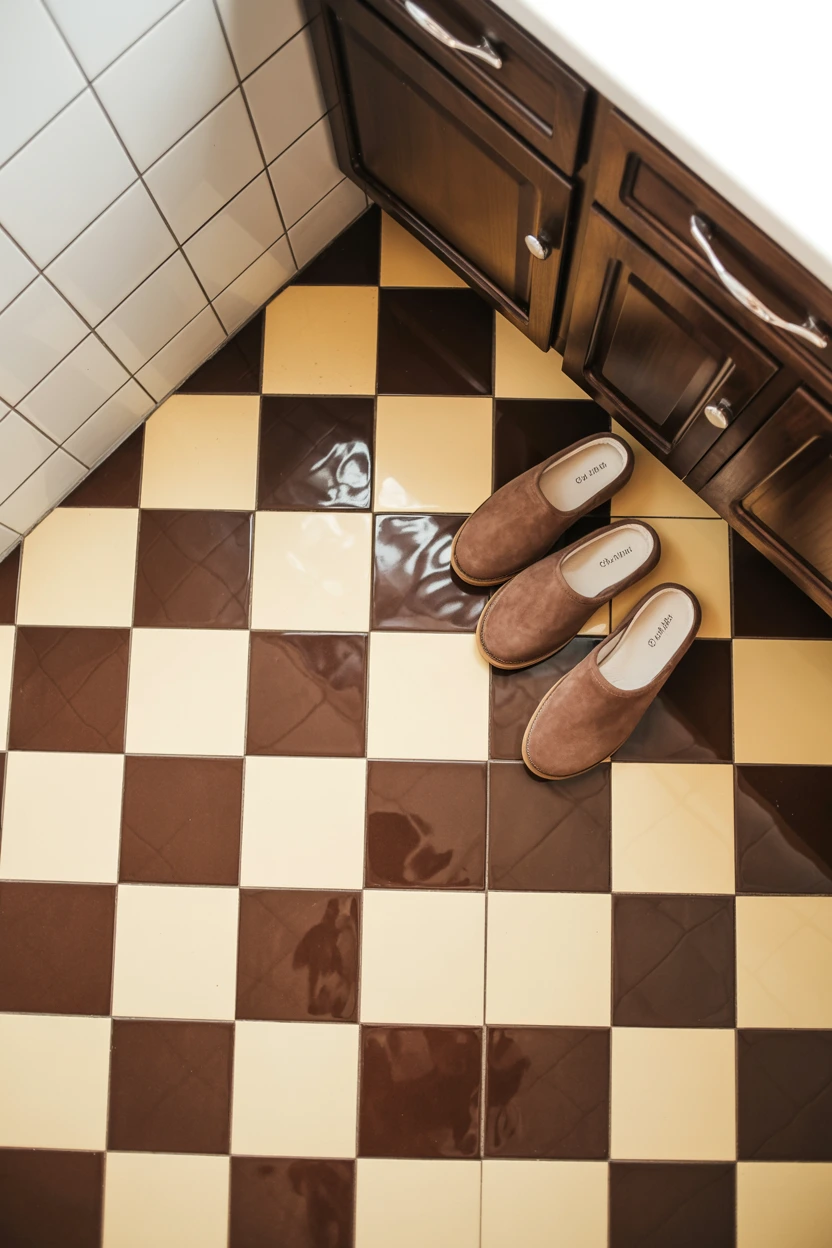
The checkerboard pattern is a timeless classic, but it had a real moment in the 70s. Swapping out the typical black and white for earthy brown and warm cream gives it an instant retro vibe. This graphic floor provides a strong foundation for the room’s design.
This pattern works well with both large and small tiles. Larger tiles can make a small bathroom feel bigger. Vinyl or linoleum tiles are a budget-friendly and historically accurate choice for achieving this look.
The beauty of this floor is its versatility. It pairs perfectly with solid-colored walls in shades like avocado green, harvest gold, or even a simple off-white. This bold flooring choice is a key feature of an authentic 70s bathroom.
Let the floor be the main pattern in the room. Keep other surfaces, like the shower curtain and towels, in solid colors pulled from the tile. This creates a cohesive look that is graphic and fun without being chaotic.
8. A Colored Porcelain Sink
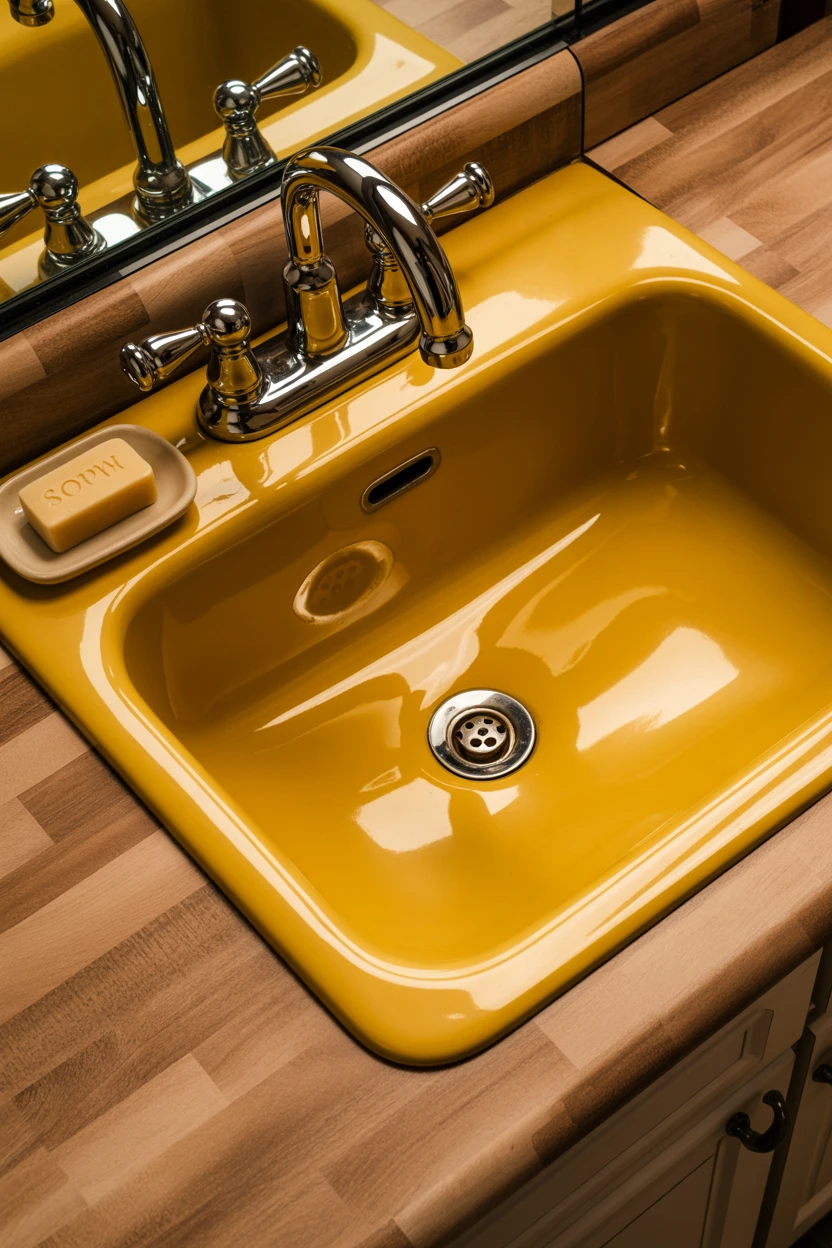
White porcelain wasn’t the only option in the 70s. Sinks, tubs, and toilets were often produced in a range of bold colors. A colored porcelain sink is a fantastic way to add an unexpected and authentic touch to your 70s bathroom.
Look for sinks in shades like mustard yellow, burnt orange, or even a deep chocolate brown. You can often find original vintage pieces at architectural salvage yards, or you can buy new reproductions from specialty suppliers.
A drop-in sink is the most common style from the period. Set it into a laminate countertop, perhaps with a wood grain or subtle pattern, for a truly period-correct look. This small detail makes a huge design impact.
Pair your colorful sink with simple chrome fixtures. The cool, shiny metal provides a nice contrast to the warm, saturated color of the porcelain. It’s a fun and quirky element that shows a real commitment to the 70s revival theme.
9. Smoked Glass Shower Screen
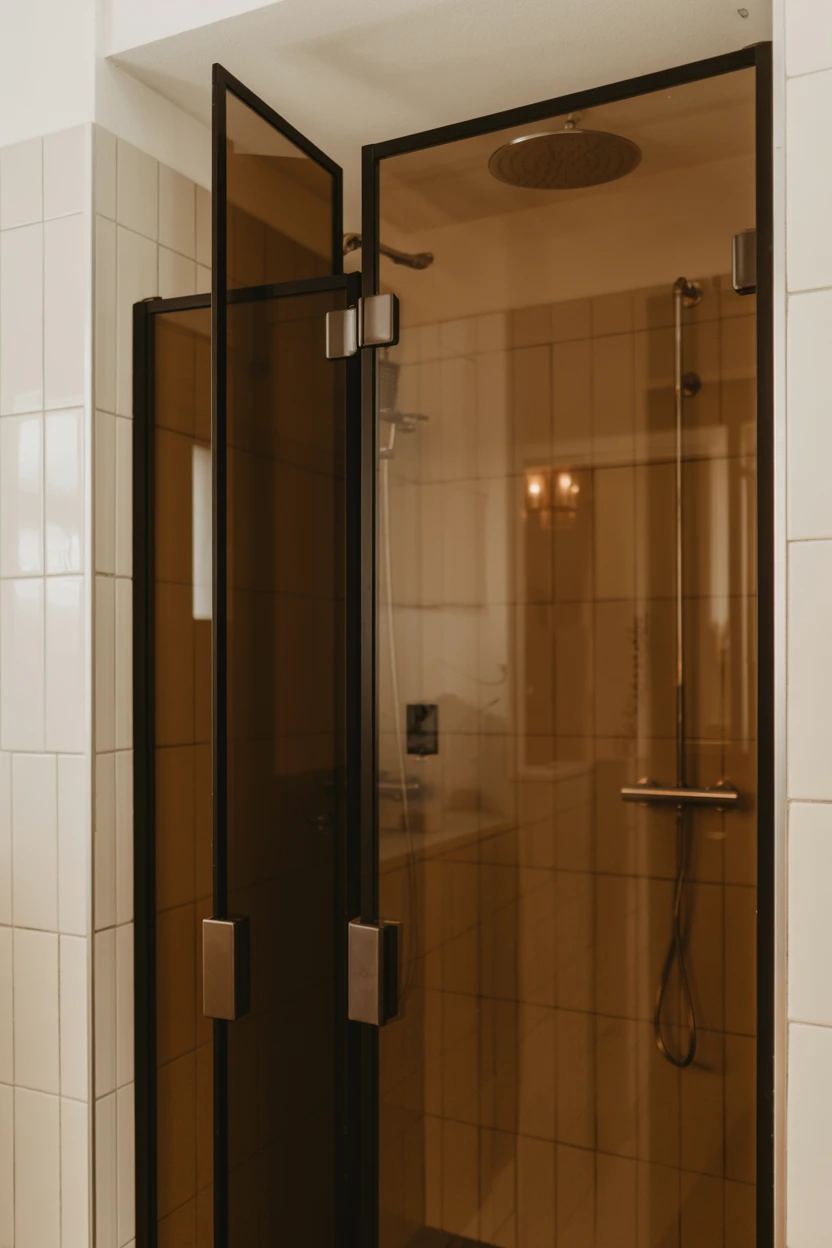
Move beyond clear glass and embrace the moody sophistication of a smoked glass shower screen. This was a popular choice in the 70s, adding a touch of glamour and mystery to the bathroom. It provides a sense of privacy without closing off the space entirely.
Smoked glass typically comes in a bronze or grey tint. The bronze tint works especially well for a 70s bathroom revival, as it adds warmth that complements the era’s earthy color palette. It looks fantastic paired with brass or chrome fixtures.
A simple, frameless panel is a great way to incorporate this look in a modern way. It feels clean and uncluttered while still delivering that retro vibe. This fixture can elevate the entire room, making it feel more luxurious and custom.
The tinted glass plays beautifully with light. It can create a warm, diffused glow when backlit from inside the shower. This subtle effect adds to the overall atmosphere, making your bathroom feel like a stylish, private retreat.
Where earthy textures and playful patterns create a sanctuary with soul.
10. High-Gloss Chocolate Brown Wall Tiles
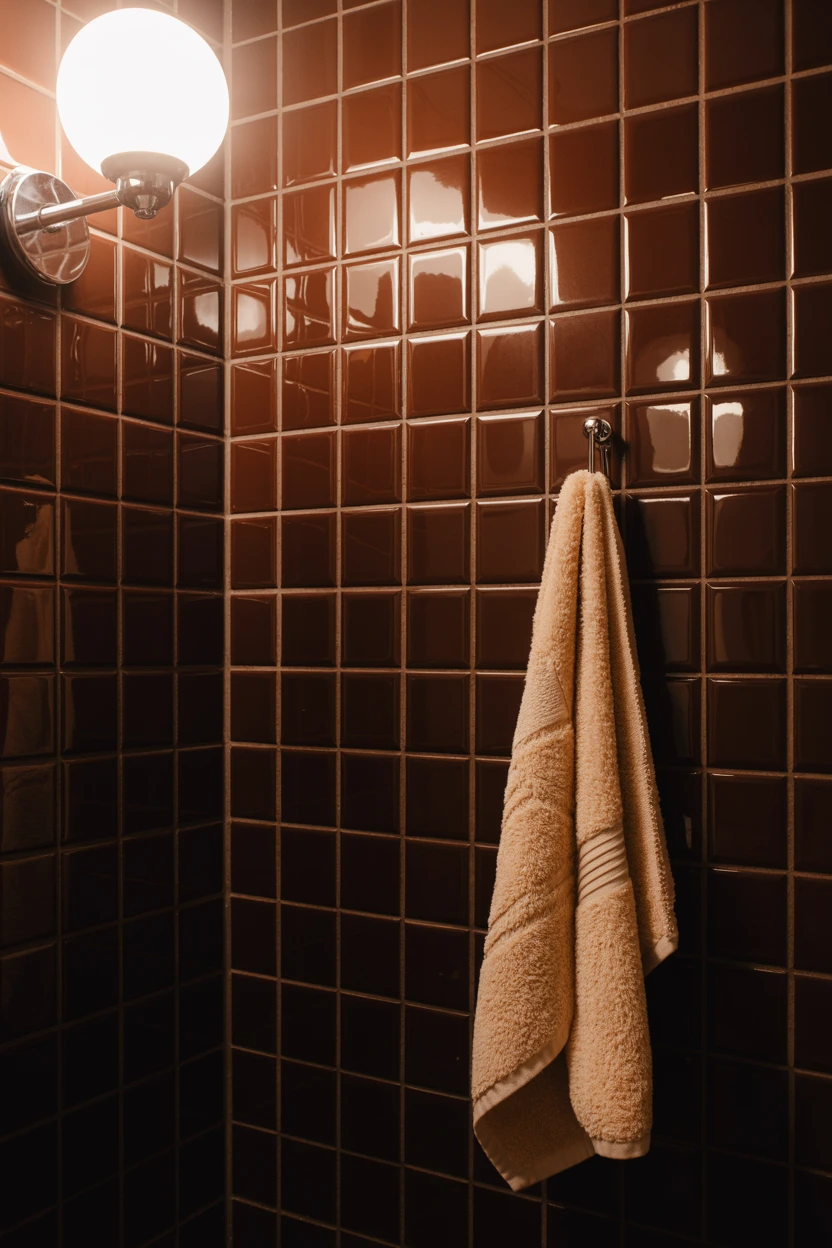
For a rich and enveloping feel, consider tiling your walls in a deep, chocolate brown. This color was a staple of 70s interior design, creating spaces that felt cozy, grounded, and sophisticated. It’s a bold choice that makes a dramatic statement.
The key to making this dark color work is a high-gloss finish. The shiny surface bounces light around the room, preventing it from feeling like a cave. It adds a touch of glamour and reflects the other elements in the space.
Small, square tiles (like 4×4 inches) are a classic choice for a 70s bathroom. Use a matching brown grout for a seamless, monolithic look, or a light cream grout to emphasize the grid pattern.
Balance the dark walls with lighter elements elsewhere. A white ceiling, a light-colored floor, and plenty of warm lighting are essential. Accents of cream, orange, or mustard yellow will pop beautifully against the rich brown background.
11. Rattan-Fronted Cabinetry
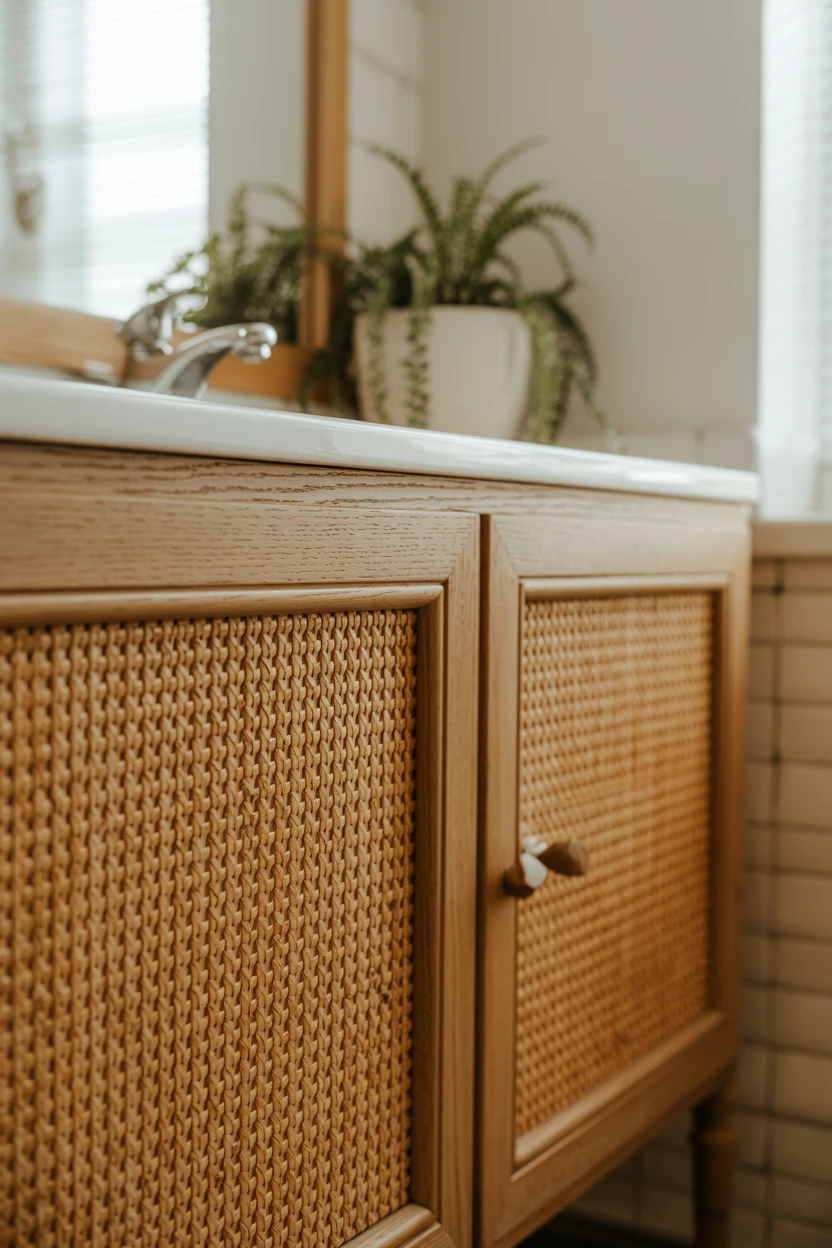
The 70s saw a huge rise in the popularity of natural, woven materials. Rattan and cane furniture brought texture and a relaxed, bohemian vibe into the home. Incorporating this into your bathroom cabinetry is a perfect nod to the era.
Look for a vanity with cabinet doors or drawer fronts that feature woven rattan panels. This detail adds instant warmth and visual interest. It breaks up the solid mass of a typical vanity and introduces a lovely, handcrafted feel.
This style works well with both light and dark wood frames. A light oak frame feels fresh and airy, while a dark walnut frame feels more grounded and rich. This element is central to a naturalistic 70s bathroom design.
Pair your rattan vanity with other organic textures. A linen shower curtain, a jute rug, and plenty of green plants will enhance the bohemian, earthy feel. It’s a look that feels casual, comfortable, and effortlessly stylish.
12. A Round Arch-Topped Mirror
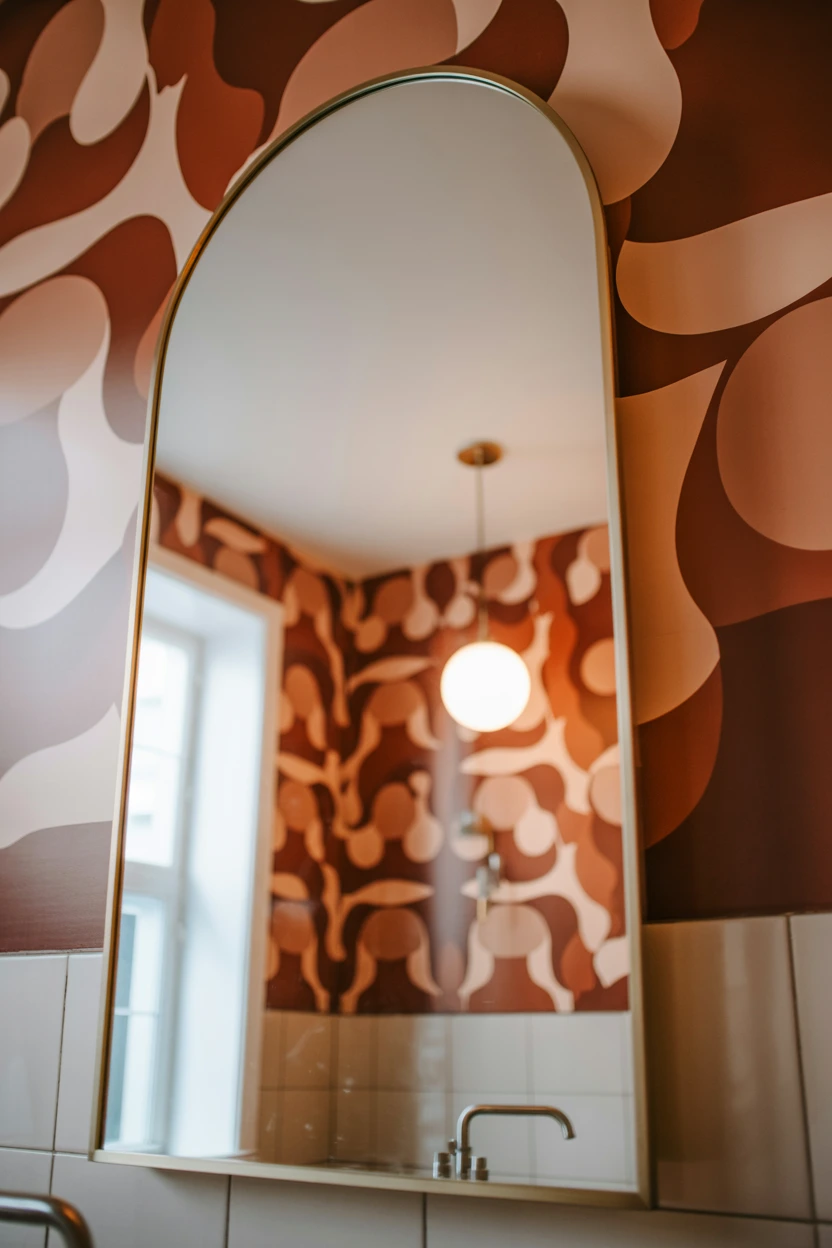
The 70s loved soft, rounded shapes and architectural details. An arch-topped mirror is a simple way to bring this popular silhouette into your bathroom. It feels softer and more decorative than a standard rectangular mirror.
This shape works to break up all the straight lines and square tiles often found in a bathroom. It adds a graceful curve that draws the eye upward, making the ceiling feel higher. It can act as a beautiful focal point above the vanity.
Look for a version with a thin metal frame in brass or chrome, or even a frameless style for a more minimal look. The arch itself is the statement. A larger scale will have more impact, creating a sense of grandeur in your 70s bathroom.
This mirror style pairs beautifully with both sconces on either side or a single pendant light hanging in front of it. The reflection of the light fixture in the curved mirror adds another layer of visual interest to the space.
The kind of room that makes you want to put on a record and stay awhile.
13. Earthy Zellige Wall Tiles
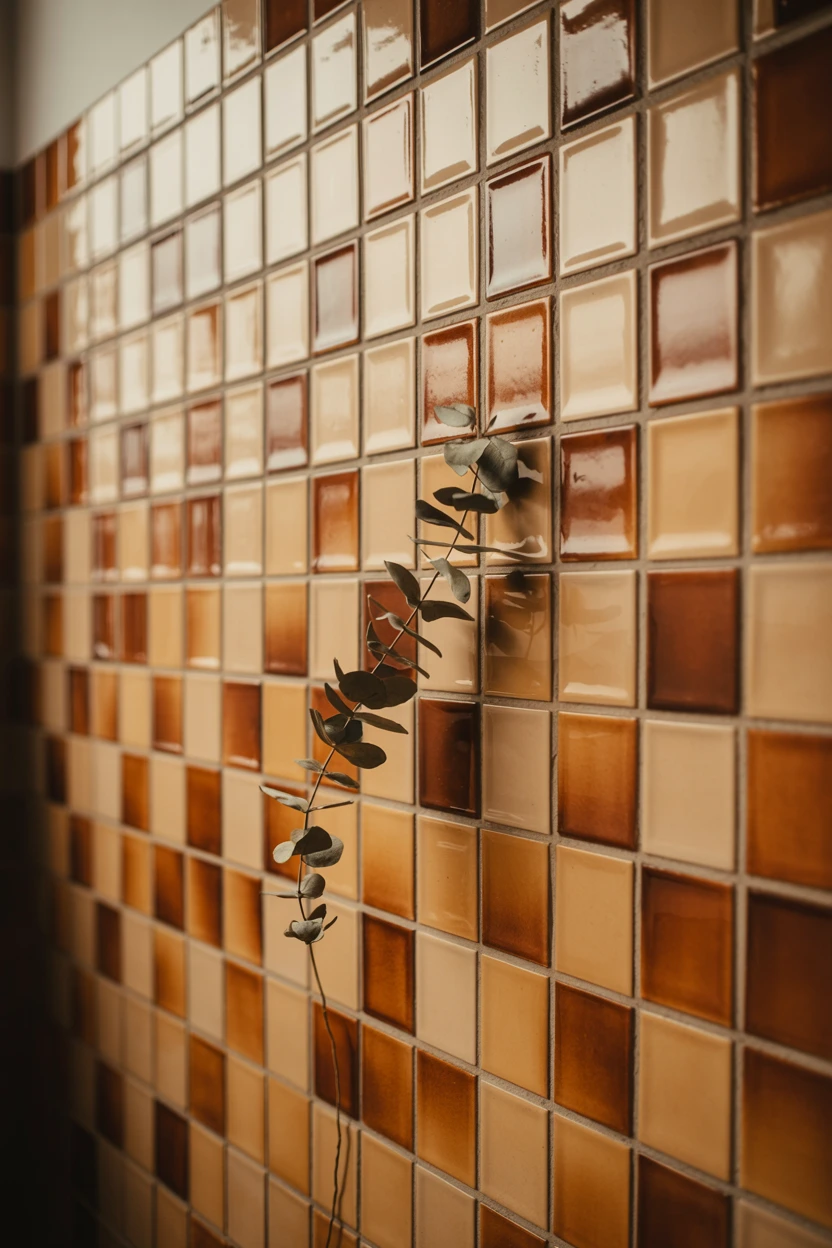
While Zellige tiles have a long history, their handmade, imperfect quality fits perfectly with the 70s love for artisanal, earthy materials. These Moroccan clay tiles have a natural, undulating surface and beautiful color variation from piece to piece.
Choose a color that fits the 70s palette, like a warm terracotta, a deep olive green, or an ochre yellow. The subtle variations in shade and a glossy finish create a wall that feels alive and full of character.
These tiles are perfect for a shower wall or a backsplash behind the sink. Their textured surface reflects light in a beautiful, shimmering way. This choice adds a layer of rustic sophistication to your 70s bathroom revival.
Because each tile is unique, the finished surface has a depth that you can’t get with mass-produced tiles. It celebrates imperfection and craftsmanship, two ideals that were at the heart of the 70s design ethos. It’s a timeless choice with a retro soul.
14. Terrazzo with Warm-Toned Chips
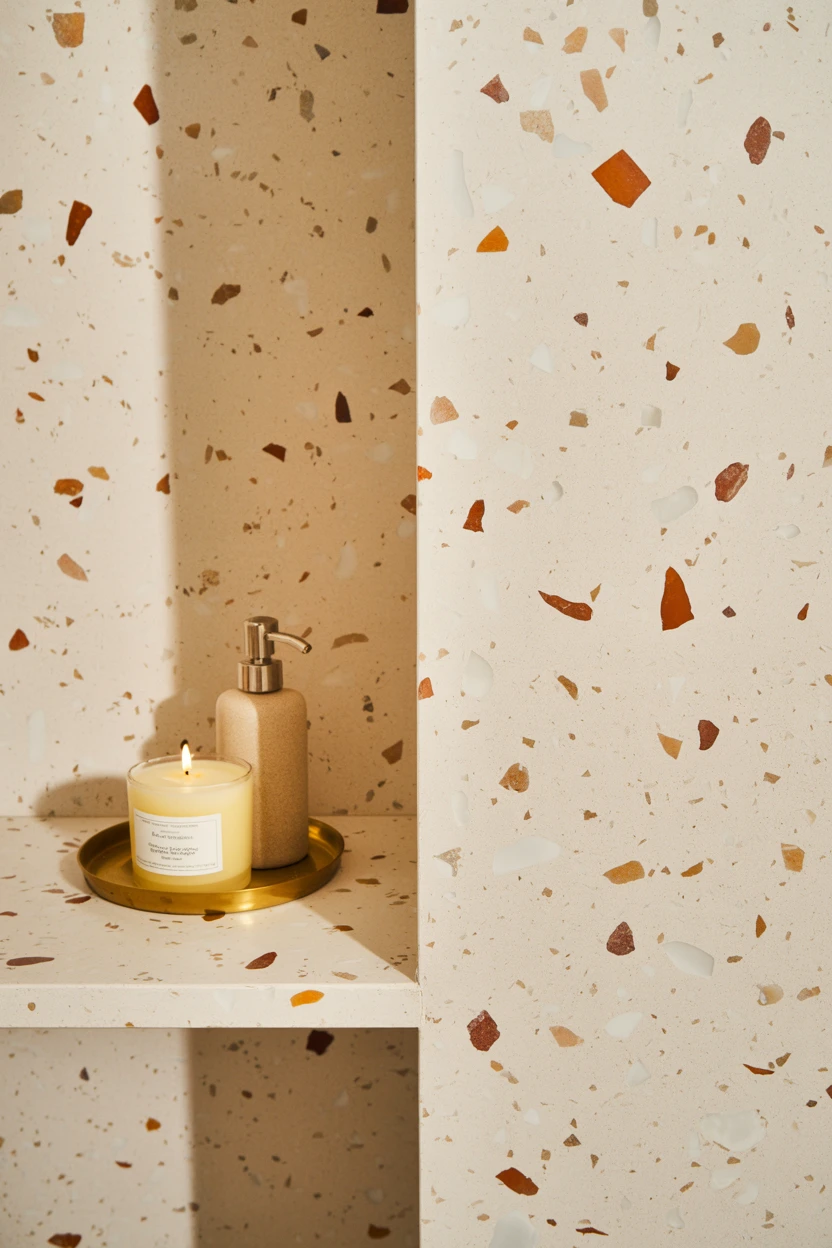
Terrazzo was incredibly popular in the 70s, used on everything from floors to countertops. To give it an authentic feel, choose a terrazzo with chips in a warm, earthy palette. Look for a mix of brown, amber, orange, and cream.
This material is wonderfully versatile. It can be used for the bathroom floor, the vanity countertop, or even as a solid slab for the shower walls. Its speckled pattern is playful and does a great job of hiding small splashes or dust.
The beauty of terrazzo is that it contains multiple colors, making it easy to coordinate with other elements in your 70s bathroom. You can pull out any of the chip colors to use for your towels, wall paint, or accessories.
Modern terrazzo is durable and easy to maintain, making it a practical choice that still delivers a strong retro punch. It adds texture and a graphic quality that feels both fun and sophisticated, perfectly capturing the spirit of the era.
15. Sleek Polished Chrome Taps
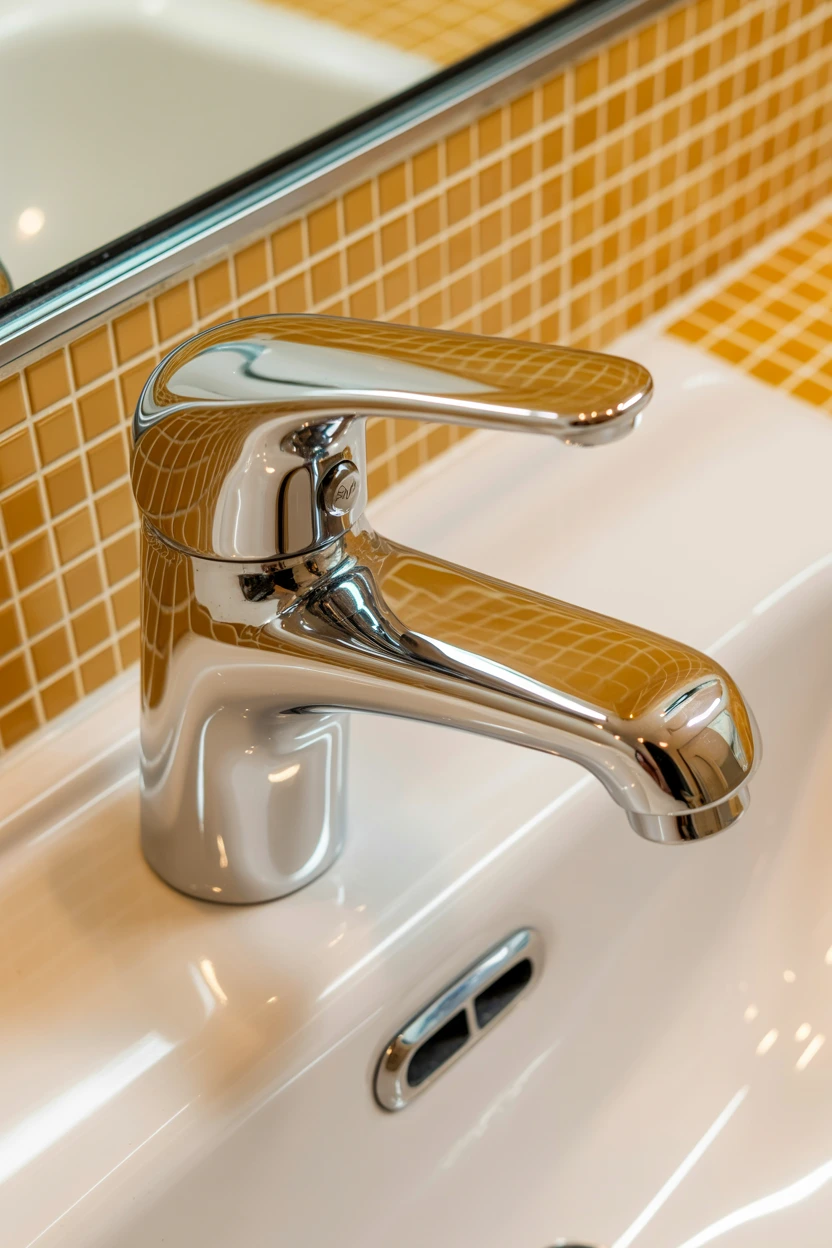
While brass was popular, polished chrome was the go-to metal for fixtures in many 70s homes. Its cool, silvery shine provided a clean, futuristic contrast to the era’s warm, earthy color palettes. It feels both classic and distinctly retro.
Look for taps with simple, clean lines. Designs from the 70s often featured minimalist shapes, single-lever controls, or classic cross handles. Avoid anything too ornate or traditional.
Chrome is a fantastic choice for a 70s bathroom because it works with everything. It looks sharp against avocado green tiles, pops against a chocolate brown wall, and complements a mustard yellow sink perfectly. Its versatility is its greatest strength.
Coordinate all the metal finishes in the room for a cohesive look. Match your chrome taps with a chrome shower head, towel bars, and cabinet hardware. This consistency will make your design feel intentional and pulled-together.
A celebration of handcrafted charm and unapologetically warm color palettes.
16. Wood-Look Porcelain Planks
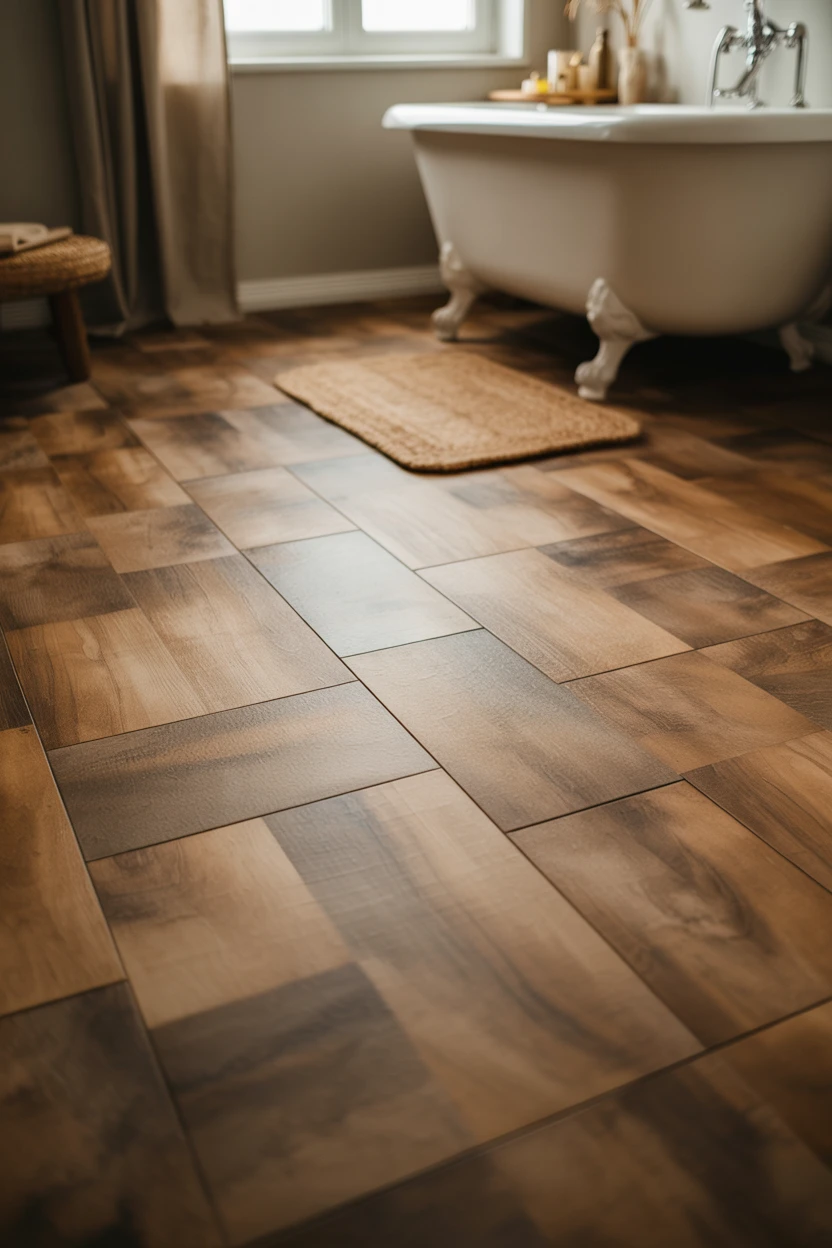
Wood paneling on the walls was a hallmark of 70s design, but real wood on a bathroom floor isn’t always practical. Modern wood-look porcelain tiles offer the perfect solution. You get the warm, organic look of wood with the durability and water-resistance of tile.
Choose a porcelain plank in a warm, medium tone like teak or walnut to capture the 70s aesthetic. These tiles are incredibly realistic, with convincing grain patterns and textures. They provide a beautiful, natural-looking base for the room.
This flooring choice is ideal for creating a cozy, spa-like 70s bathroom. The look of wood underfoot adds a layer of warmth that you can’t get from traditional ceramic tile. It feels comfortable and inviting.
Pair the wood-look floor with other natural textures. A stone countertop, linen textiles, and lots of plants will enhance the organic, earthy vibe. It’s a great way to ground a bathroom that features more colorful tiles or fixtures.
17. A Macrame Pendant Light
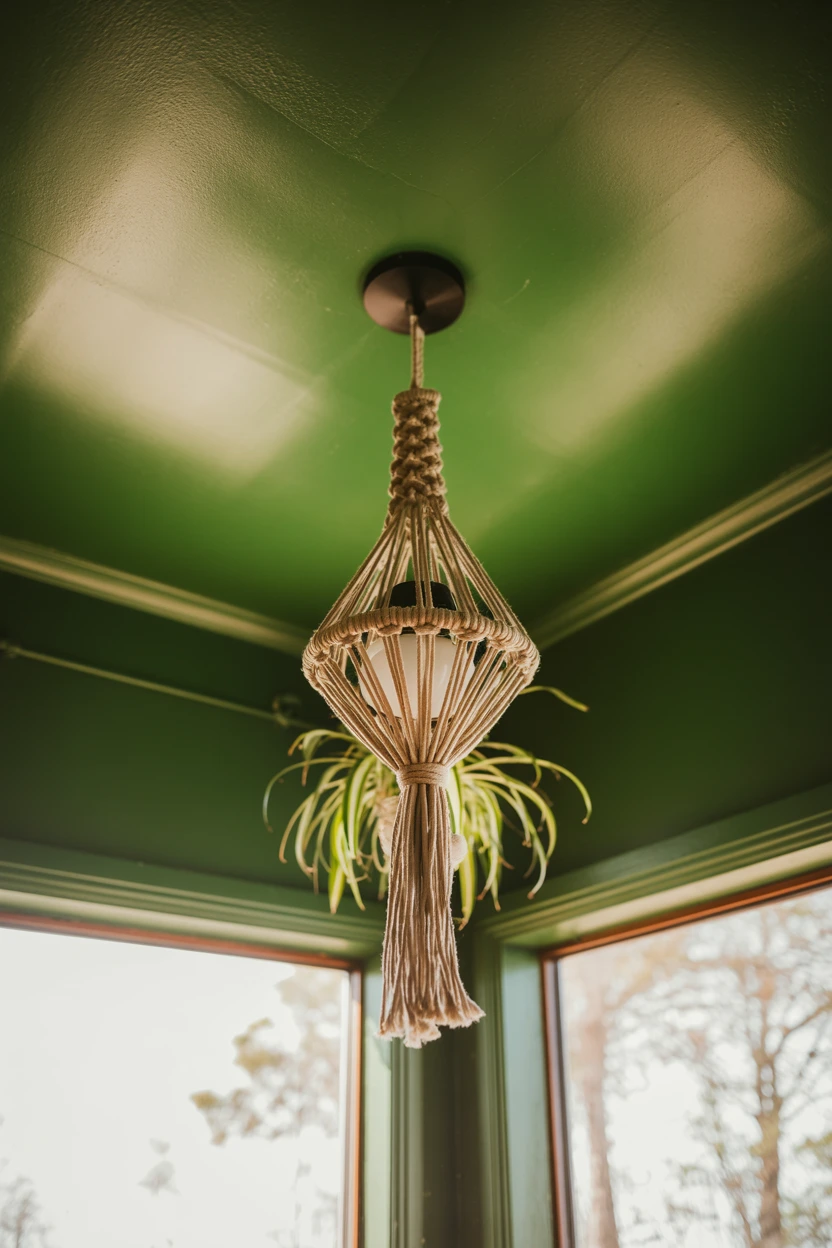
Macrame was everywhere in the 70s, from wall hangings to plant holders. A macrame pendant light is a creative and stylish way to incorporate this iconic craft into your bathroom. It adds texture, a handmade feel, and soft, diffused light.
Hang a single macrame pendant in a corner of the room, perhaps over a freestanding tub or next to the vanity. It’s not meant to be the primary light source but rather an accent that adds atmosphere and a bohemian touch.
Choose a design made from natural cotton rope in an off-white or cream color. When lit, the light will filter through the knotted pattern, casting beautiful, gentle shadows on the walls and ceiling. This fixture is a key part of a laid-back 70s bathroom vibe.
Ensure any light fixture used in a bathroom is rated for damp locations for safety. This piece works as both a functional light and a piece of art, perfectly capturing the crafty, free-spirited nature of the decade.
18. Mirrored Wall Tiles for Glamour
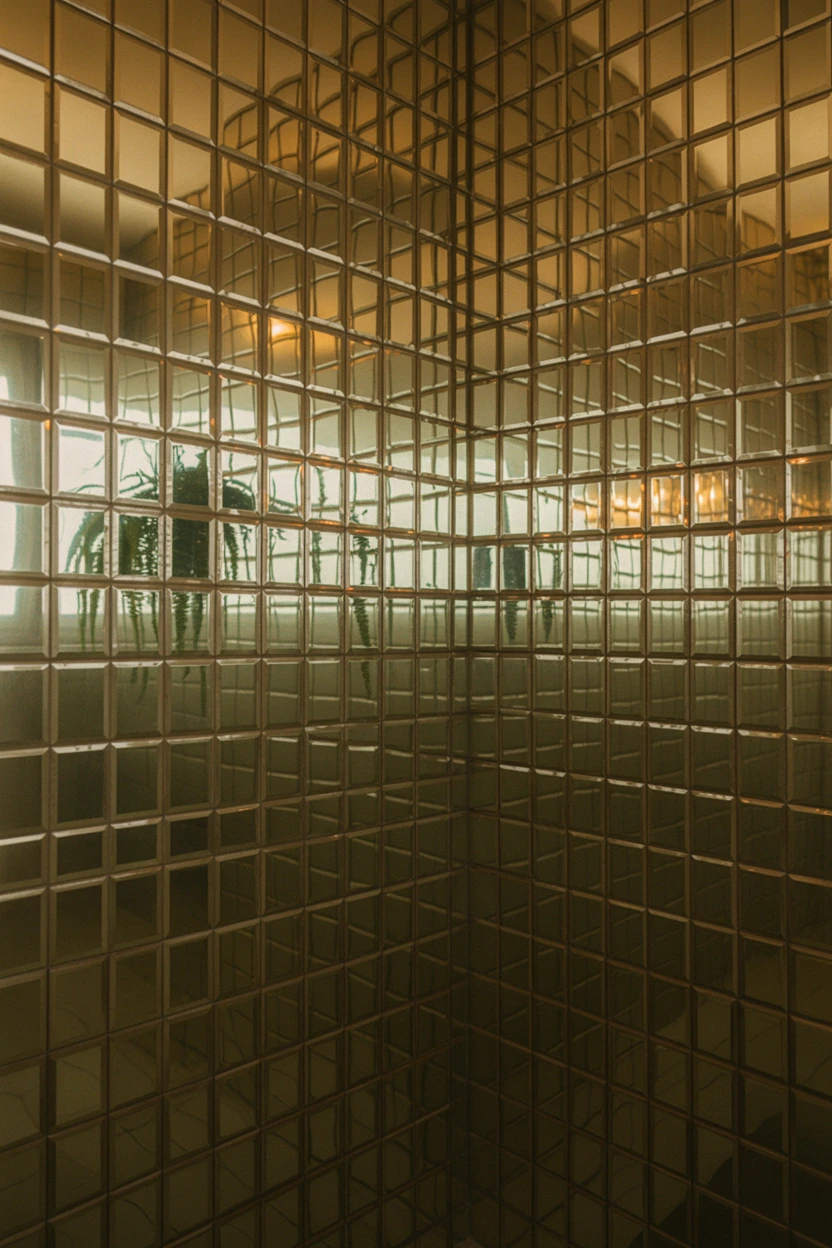
For a touch of 70s disco-era glamour, consider an accent wall of mirrored tiles. This bold choice can make a small bathroom feel infinitely larger and brighter by reflecting light and the surrounding space. It’s a look that is pure, unapologetic fun.
You don’t need to tile the whole room. Use mirrored tiles on the wall behind the vanity to create a stunning focal point. Look for tiles with an antiqued or slightly tinted finish, like bronze or gold, to give them a softer, more vintage feel than a stark, clear mirror.
These tiles work incredibly well with dim, moody lighting. The reflections will sparkle and dance, creating a dynamic and atmospheric effect. This is a perfect choice for a powder room where you can afford to be a bit more dramatic.
This feature is a nod to the more luxurious side of the 70s. Paired with sleek chrome fixtures and maybe a touch of faux fur in a bath mat, your 70s bathroom will feel like a private, glamorous hideaway.
Letting personality shine through in every curve, color, and finish.
19. Small Square Mosaic Accent Tiles
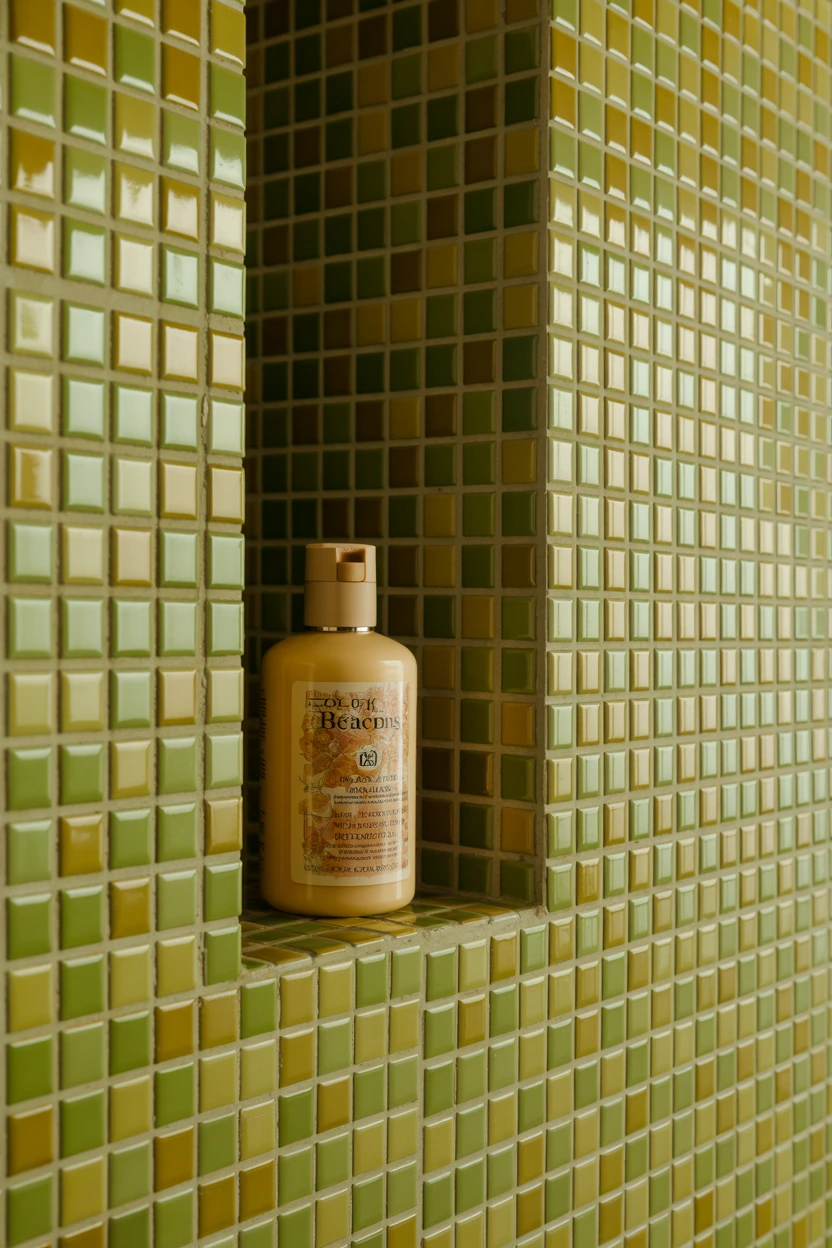
If you love the 70s color palette but don’t want to commit to a wall of solid avocado green, small mosaic tiles are your best friend. They allow you to use all those iconic colors together in a more subtle, decorative way. This is a great way to get the retro feel on a smaller scale.
Use these mosaics to create a decorative border, line the back of a shower niche, or create a “rug” effect on the floor. A blend of earthy greens, golds, oranges, and browns in a small square format feels very authentic.
This is a fantastic way to add a custom, detailed touch to your 70s bathroom design. It shows a thoughtful attention to detail and allows for a lot of creativity in how you combine the colors and patterns.
You can even find vintage-style mosaic sheets with pre-set patterns. These accents are perfect for tying the whole color scheme of the room together, pulling in tones from the walls, towels, and other fixtures into one cohesive design element.
20. A Shag Pile Bath Mat
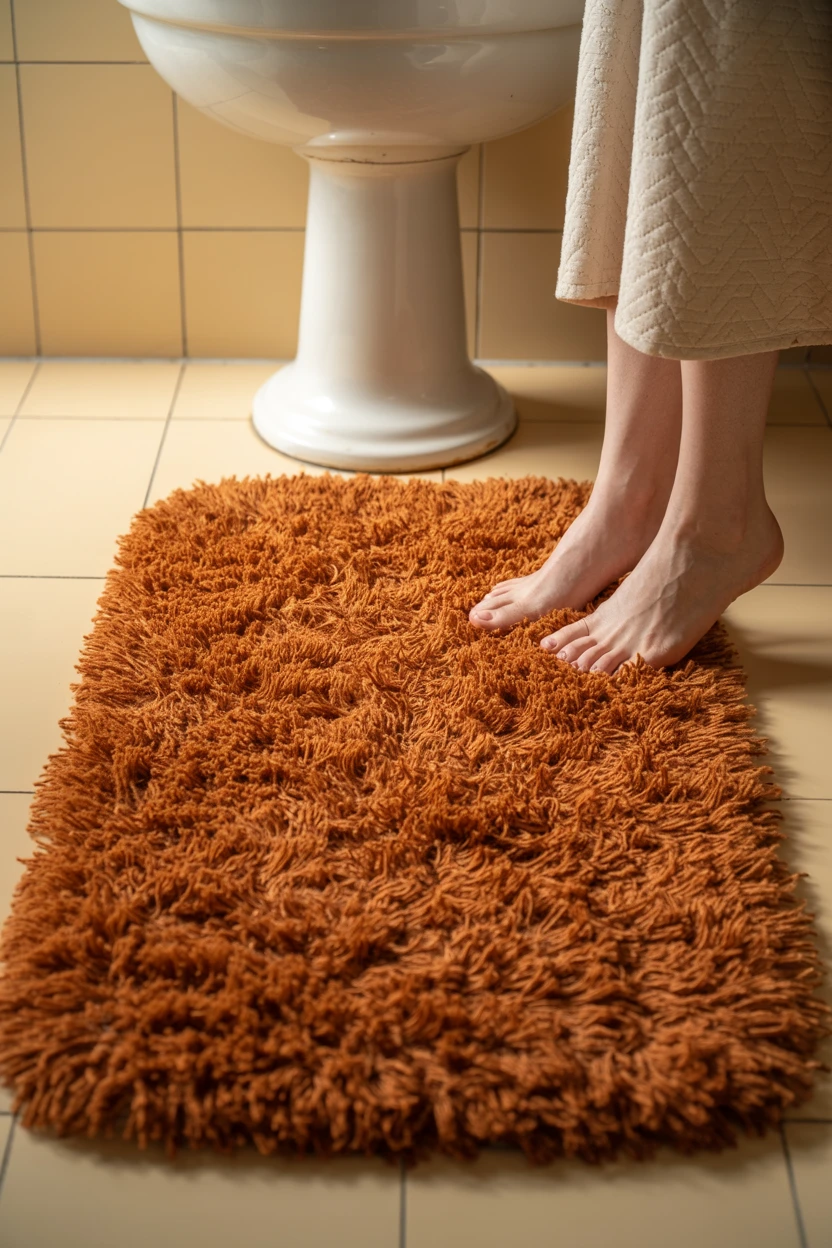
Texture was just as important as color in the 70s, and nothing says texture like a shag pile rug. Adding a shag bath mat is one of the easiest and most affordable ways to bring an instant touch of 70s style to your bathroom.
Choose a mat in a classic 70s color like burnt orange, chocolate brown, or even a vibrant mustard yellow. The deep, plush pile feels incredibly luxurious underfoot after a shower or bath. It adds a layer of softness and comfort to the room.
Look for a bath mat that is machine washable for practical reasons. A round shape can be a fun alternative to the standard rectangle, echoing the rounded forms popular in 70s design. This small accessory can make a big impact.
This is a great non-permanent fixture for renters or anyone hesitant to make big changes. A simple shag mat can set the tone for a full 70s bathroom revival or just add a fun, retro accent to a more neutral space.
21. Wall-Mounted Faucet and Vessel Sink
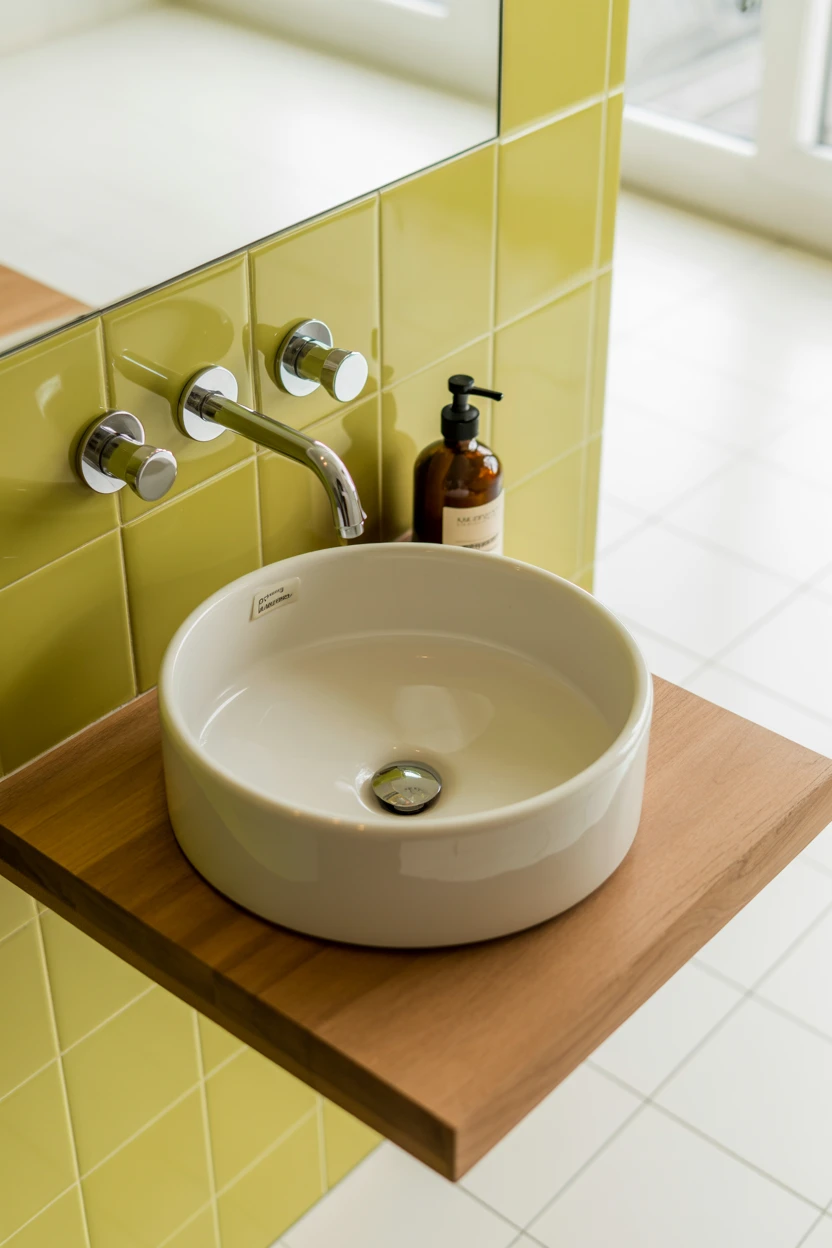
For a look that blends 70s materials with a contemporary layout, consider a wall-mounted faucet paired with a vessel sink. This combination feels clean and uncluttered, and it highlights your choice of tile on the wall behind it.
The vessel sink, sitting on top of the counter, feels like a modern interpretation of the colorful basins of the 70s. Choose a simple ceramic bowl in white or a bold color. The faucet coming directly from the wall is a sleek touch that keeps the countertop clear.
This setup works especially well on a floating wood vanity. The combination of the warm wood, the ceramic sink, the chrome fixture, and a colorful tile backdrop creates a layered, textured look. It’s a sophisticated take on the 70s bathroom.
A wall-mounted faucet is also easier to clean around than a traditional deck-mounted one. This practical benefit, combined with the stylish aesthetic, makes it a winning choice for a fresh and functional 70s-inspired space.
Conclusion
Creating a 70s bathroom revival is all about embracing warmth, personality, and playful design. It’s a chance to step away from predictable trends and build a space that truly reflects your own unique style. From bold floor tiles to funky, colorful sinks, the options are full of character and charm.
The key is to balance the more daring elements with natural materials and simple shapes. Don’t be afraid to mix textures like glossy tile, warm wood, and soft textiles to create a room that feels layered and inviting. Start with one or two ideas you love and build the design from there.
Ultimately, your bathroom should be a space where you feel comfortable and happy. By choosing groovy tiles and funky fixtures, you can craft a personal retreat that is not just a throwback, but a timeless expression of fun and individuality. Enjoy the process of creating your perfect 70s bathroom.