
Creating a kitchen that feels both peaceful and functional can seem like a difficult balance to strike. You might be tired of a space that feels cluttered or visually busy, craving a room that serves as a calm retreat. The goal is to design a kitchen that supports your daily life without adding stress, a place where simplicity and warmth coexist.
This is where the principles of Japandi design can help guide your renovation. It’s about more than just a certain look; it’s about creating an atmosphere of quiet harmony and purpose. A Japandi aesthetic kitchen remodel focuses on natural materials, clean lines, and thoughtful details, helping you build a space you truly love to be in.
1. Light Oak Fluted Cabinetry
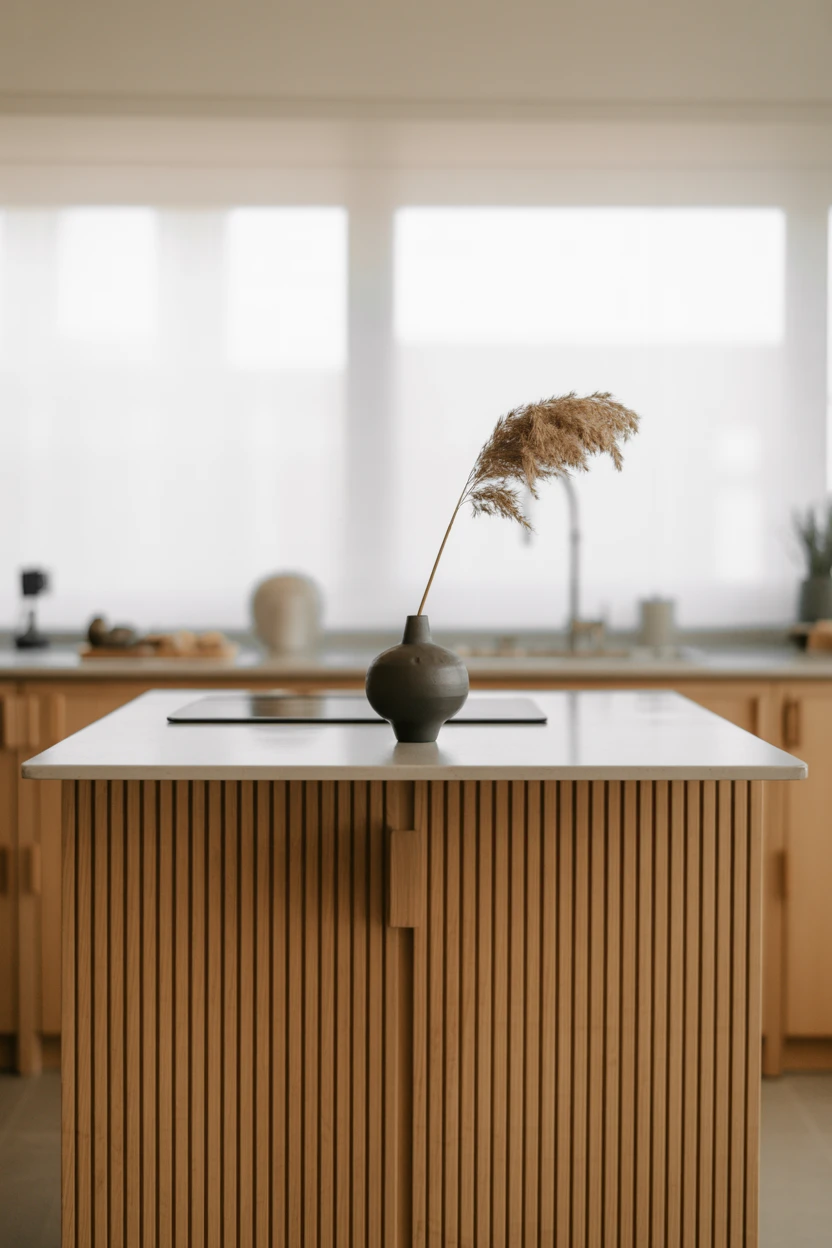
Fluted wood panels add texture without overwhelming the senses. This detail brings a subtle, rhythmic quality to your cabinetry. It creates a beautiful play of light and shadow.
Choose a light rift-cut oak for this feature. The straight grain of the wood keeps the look clean and modern. This material choice is a hallmark of the Japandi aesthetic kitchen, blending Scandinavian lightness with Japanese precision.
Pair these cabinets with simple, hardware-free fronts for a seamless appearance. You can use integrated pulls or a push-to-open system. This maintains the minimalist feel while letting the wood texture be the main feature.
This design element works well for both upper and lower cabinets. It also looks stunning on a kitchen island. The vertical lines draw the eye upward, making the space feel taller and more open. It’s a sophisticated way to add character.
2. Matte Black Fixtures as Accents
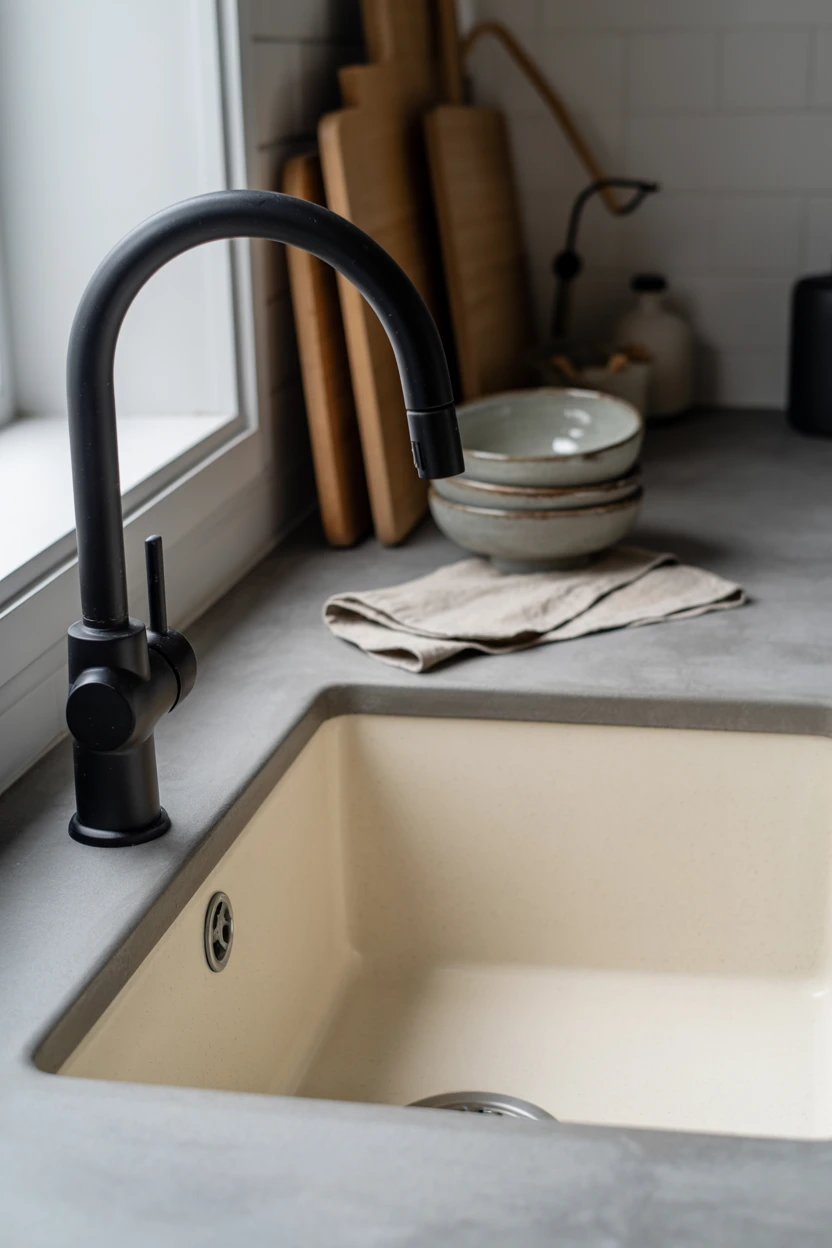
Black fixtures provide a grounding contrast in a light-filled space. They act as punctuation points, adding definition and a touch of modern drama. This is a simple but effective choice.
Select a faucet, cabinet pulls, and lighting with a matte black finish. The lack of shine feels more organic and understated. It complements natural materials like wood and stone beautifully.
These dark accents help to create visual balance. In a Japandi aesthetic kitchen filled with neutral tones, these elements prevent the design from feeling flat. They add depth without introducing a jarring color.
Be intentional with placement. A black faucet, a few black cabinet knobs, and the frame of a pendant light are often enough. The key is to use them sparingly so they stand out as deliberate design choices.
3. Zellige Tile Backsplash
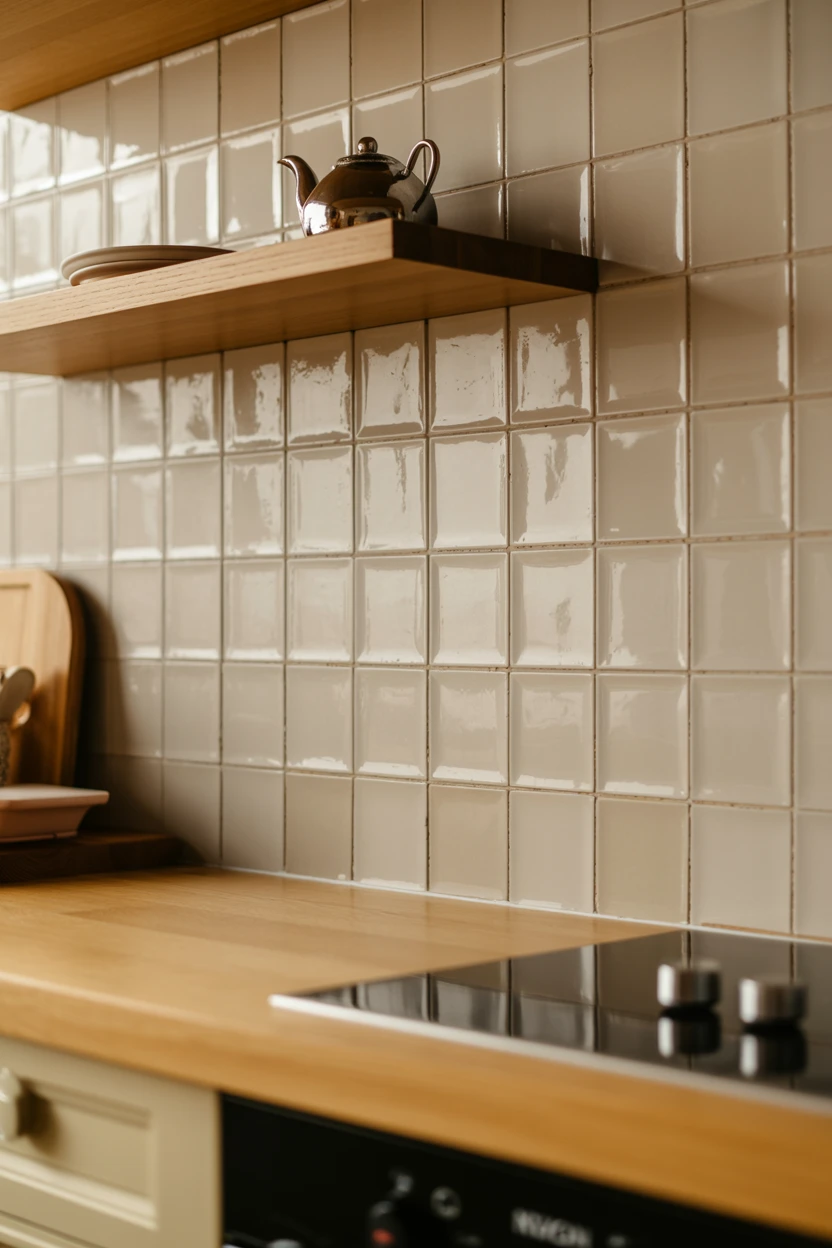
Handmade Zellige tiles bring a unique, imperfect beauty to the kitchen. Their slight variations in color, size, and texture add a sense of history and character. This reflects the wabi-sabi principle of finding beauty in imperfection.
Choose tiles in a soft, neutral color like off-white, beige, or a muted gray. This allows the texture and glossy surface to be the main focus. The way light reflects off these tiles adds a gentle shimmer to the room.
This type of backsplash pairs wonderfully with clean, modern cabinets. The contrast between the sleek cabinetry and the rustic tiles is central to the Japandi aesthetic kitchen. It creates a space that feels both new and timeless.
When installing, use a minimal grout line with a matching color. This lets the tiles themselves be the star. The result is a backsplash that feels like a single, cohesive art piece rather than a grid of individual tiles.
A quiet kitchen is not one of silence, but one of visual harmony and purpose.
4. Integrated Stone Sink
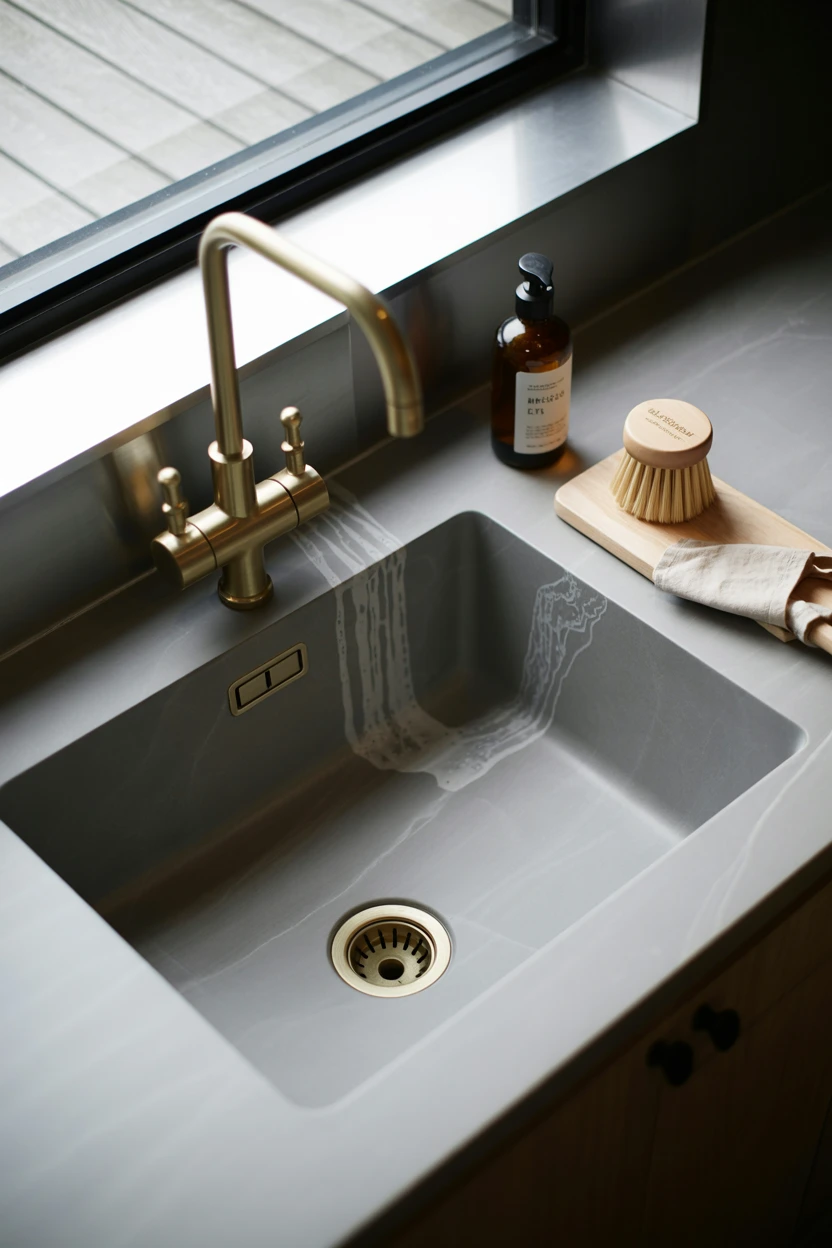
An integrated sink creates a seamless, uncluttered look. Crafted from the same material as the countertop, it eliminates lines and edges. This enhances the minimalist feel of the space.
Choose a natural stone like soapstone, marble, or quartzite. The organic patterns and texture of the stone add a layer of natural beauty. This feature turns a functional area into a stunning focal point.
This design choice is perfect for a Japandi aesthetic kitchen. It embodies the principle of functional simplicity. The uninterrupted surface is also very easy to clean, which adds to the sense of calm and order.
Pair the stone sink with a wall-mounted faucet. This keeps the countertop clear and further emphasizes the clean lines. The combination of natural stone and sleek fixtures is a beautiful study in contrasts.
5. Concealed Appliance Garage
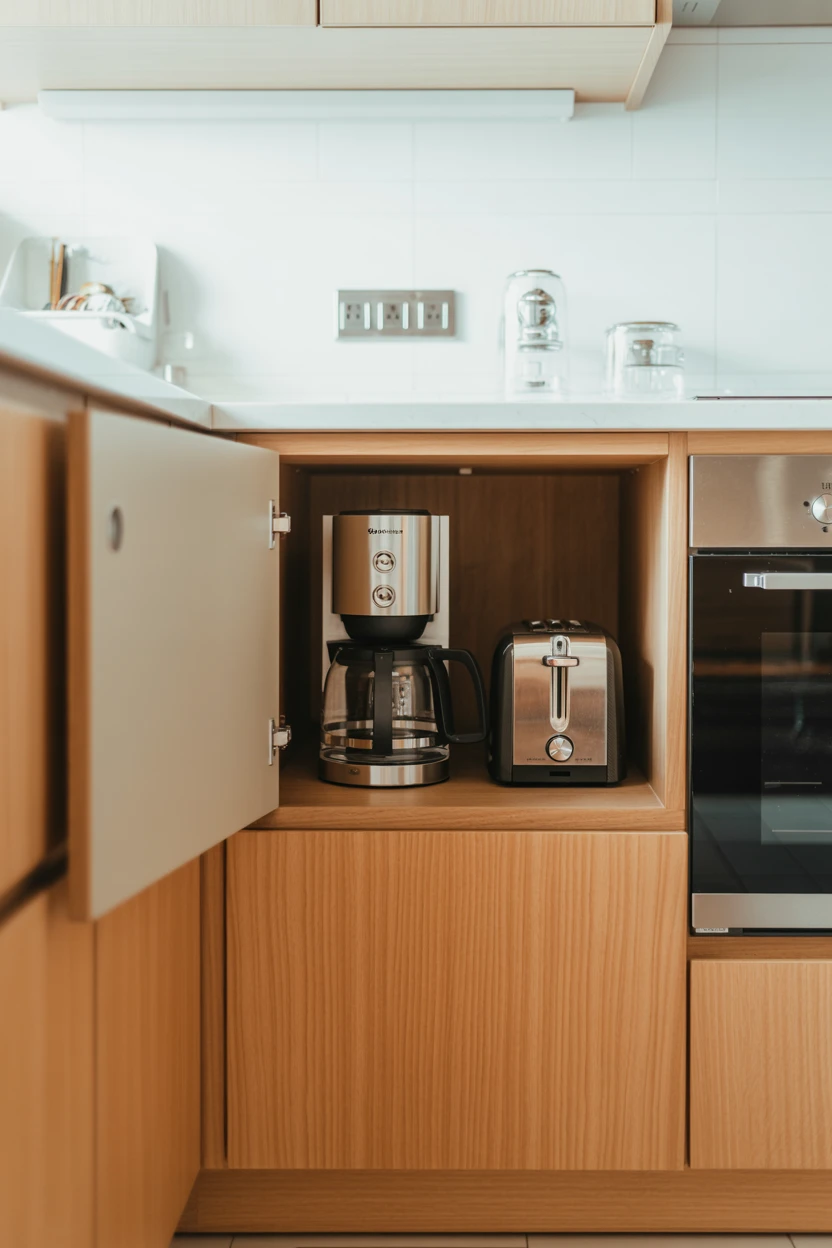
Maintaining a clutter-free countertop is essential for a peaceful kitchen. An appliance garage is a cabinet designed to hide small appliances. It keeps things like your toaster, blender, and coffee maker out of sight.
This feature is usually a floor-to-counter cabinet with a door that lifts up or retracts. You can also use standard cabinet doors that blend in with the rest of your kitchen. The key is seamless integration.
Inside, include outlets so the appliances can be used in place. This makes your morning routine easy without sacrificing the clean look. A well-designed Japandi aesthetic kitchen is all about this kind of hidden functionality.
By hiding these everyday items, you allow the beautiful materials of your kitchen to shine. The space feels more intentional and less chaotic. It’s a practical solution for achieving a truly minimalist environment.
6. Washi Paper Pendant Lighting
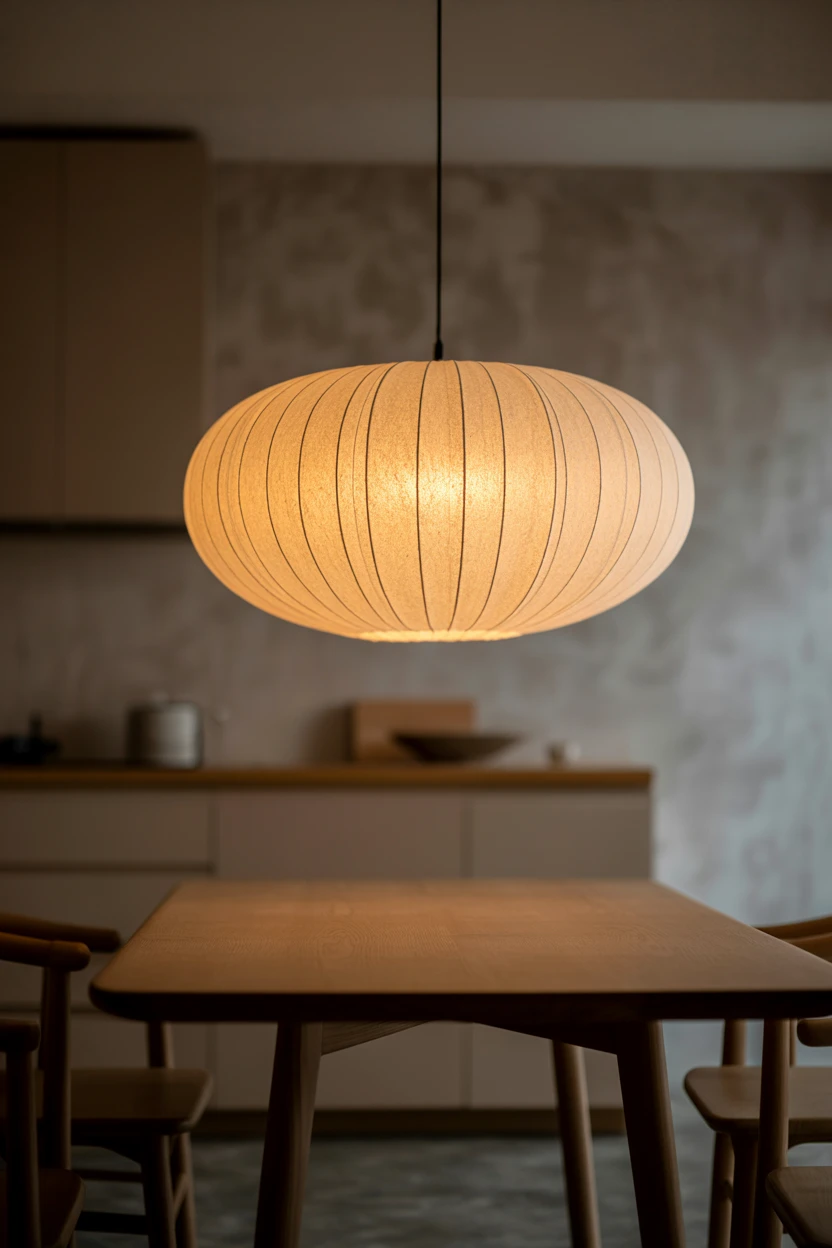
Lighting plays a huge role in creating atmosphere. Washi paper pendant lights, inspired by Japanese lanterns, cast a soft, warm glow. They add an organic, sculptural element to the room.
Choose a large, single pendant to hang over an island or a small dining nook. The delicate texture of the paper provides a beautiful contrast to the harder surfaces of the kitchen. It adds a layer of softness.
These lights are a perfect fit for a Japandi aesthetic kitchen. They bring in a distinctly Japanese element while aligning with the Scandinavian love for cozy, ambient lighting. It’s a beautiful fusion of both styles.
Look for designs with simple shapes and natural frames, like bamboo or light wood. The light they emit is gentle and non-glaring, making the kitchen feel inviting and calm, especially in the evenings.
The most beautiful spaces are born from a thoughtful blend of simplicity and warmth.
7. Open Shelving with Curated Pottery
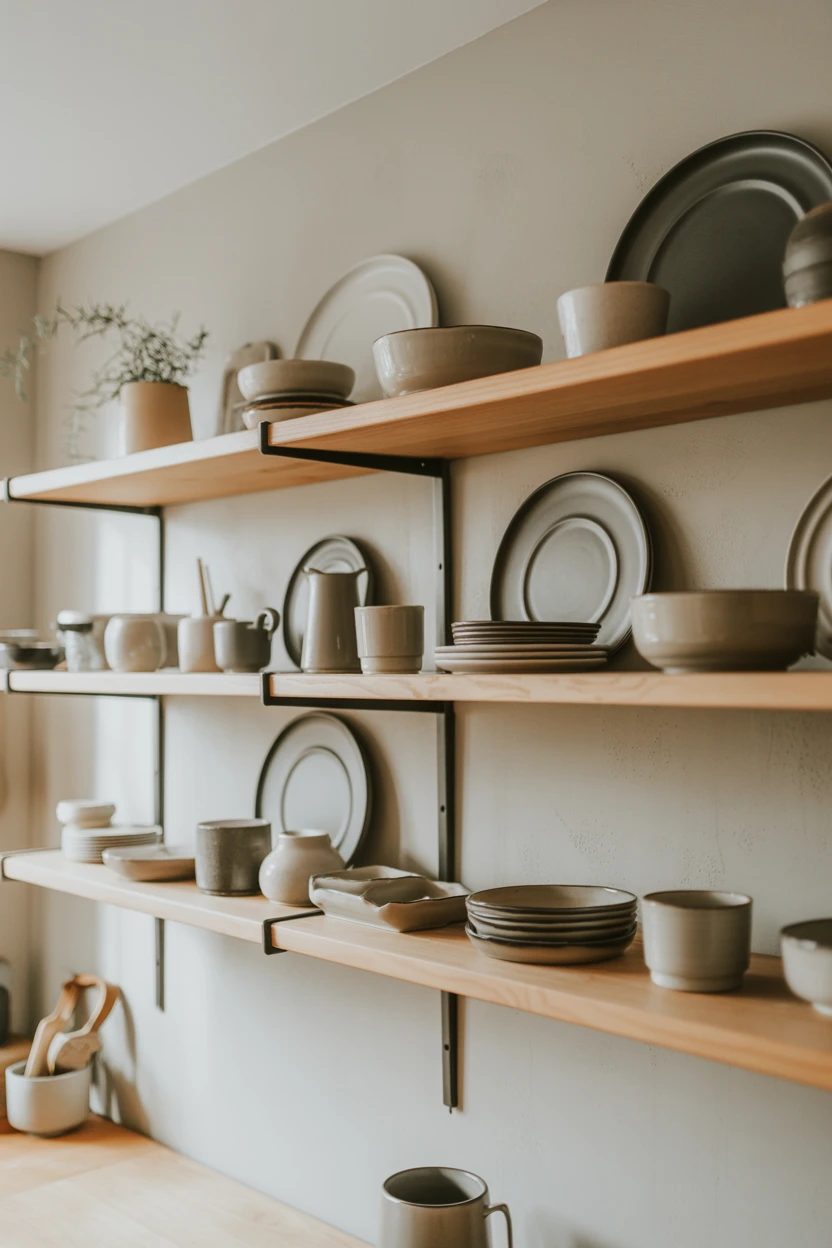
Open shelving offers a chance to display beautiful, everyday objects. It breaks up rows of closed cabinets, making the kitchen feel more open and personal. The key is careful curation.
Use simple, floating shelves made from the same wood as your cabinets. This creates a cohesive look. Place them against a simple backdrop, like a plaster or tile wall, to make the items on them stand out.
Style the shelves with a small collection of handmade pottery. Choose pieces with organic shapes and matte glazes in earthy tones. This approach turns functional items into a key part of your Japandi aesthetic kitchen decor.
Avoid clutter at all costs. Leave plenty of empty space around each object. The goal is to create a display that feels calm and balanced, not a storage area for all of your dishes.
8. A Muted, Earth-Toned Color Palette
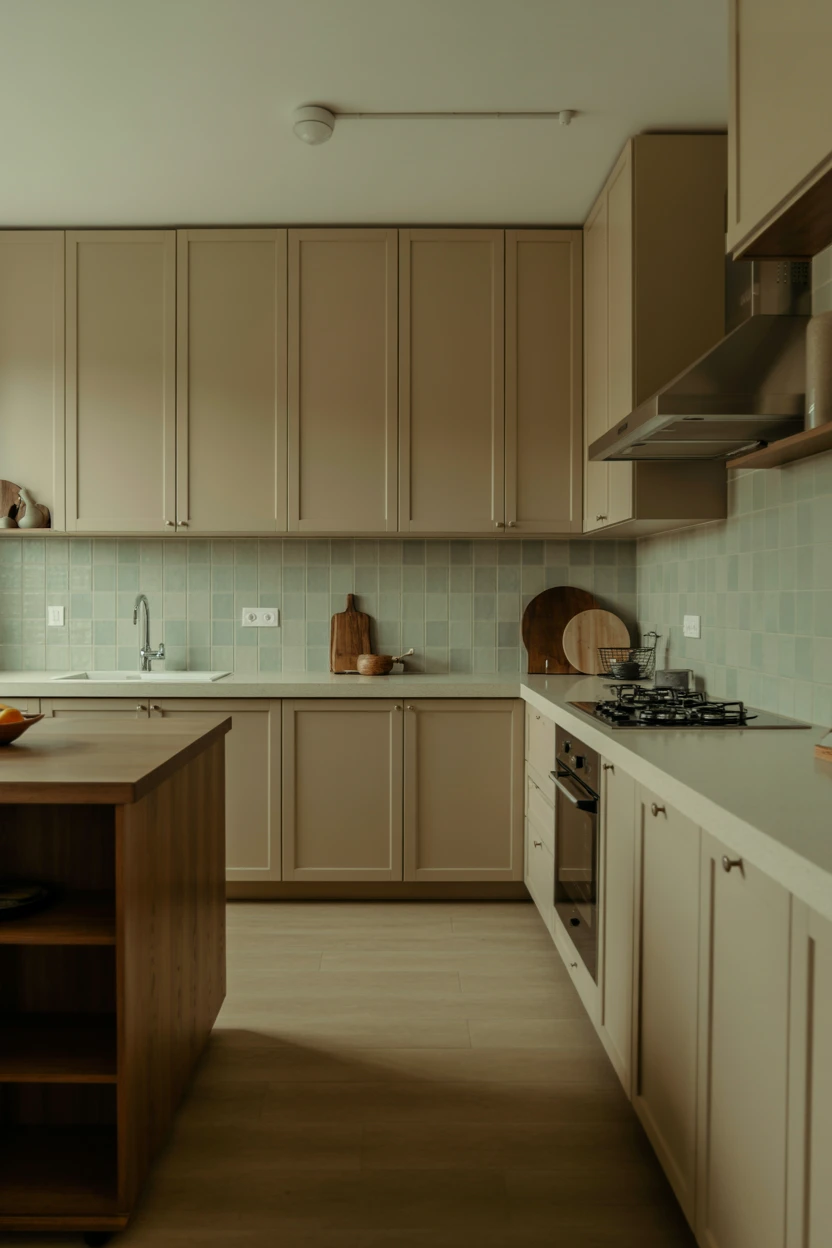
Color is foundational to the mood of your kitchen. The Japandi style favors muted colors inspired by nature. Think soft grays, warm beiges, sage greens, and earthy terracotta.
Start with a base of warm white or a light greige for the walls. This creates a bright and airy foundation. Then, layer in other subtle colors through your cabinetry, backsplash, or textiles.
This gentle color scheme is key to creating a calming Japandi aesthetic kitchen. These colors are not demanding of your attention. Instead, they create a peaceful backdrop for daily life.
Incorporate natural wood tones to add warmth and prevent the space from feeling cold. The combination of muted colors and organic wood grain is the perfect balance of Scandinavian hygge and Japanese simplicity.
9. Wide Plank Wood Flooring
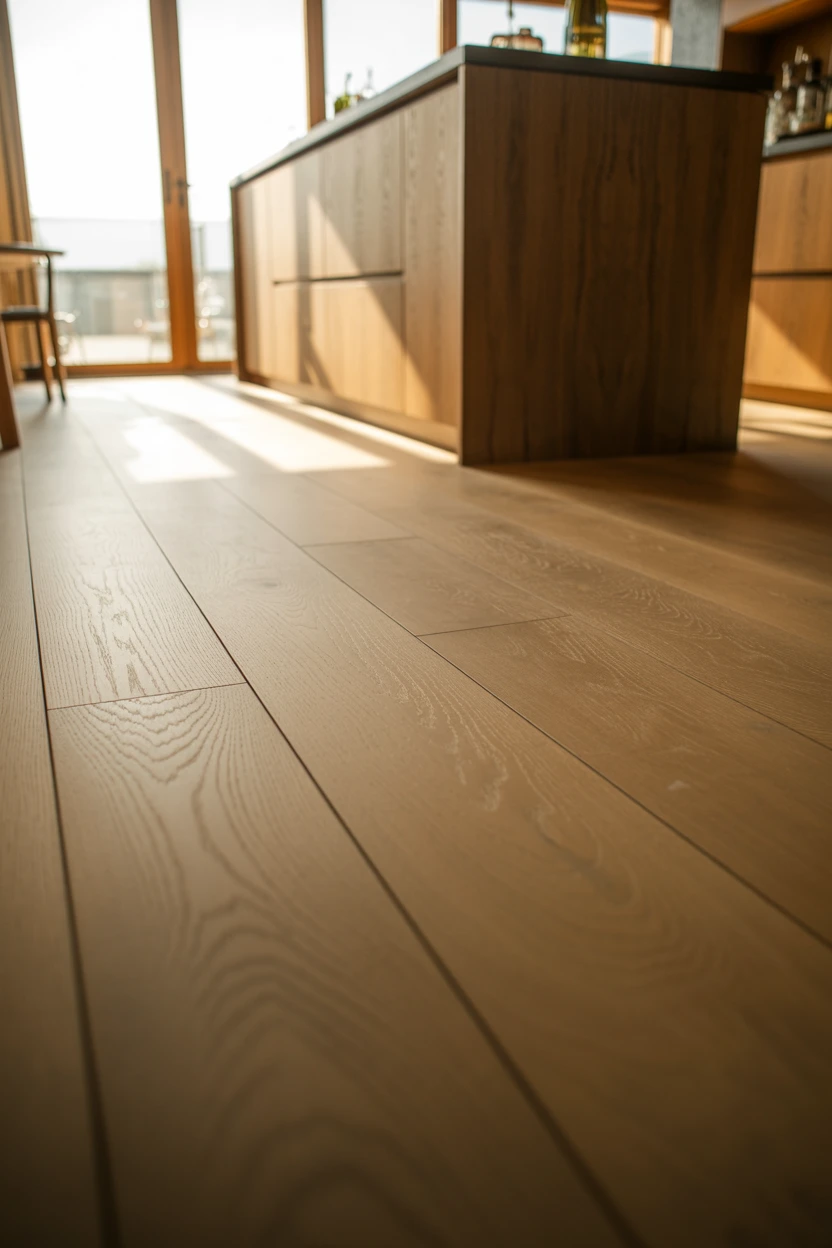
The flooring you choose can unify the entire kitchen design. Wide plank wood floors in a light, natural finish are an ideal choice. They make the space feel larger and more continuous.
Opt for woods like white oak or maple with a matte or satin finish. This avoids a high-gloss look that can feel distracting. The goal is to celebrate the natural, raw beauty of the material.
These floors bring a significant amount of warmth and texture to the room. They provide a soft, organic foundation for the clean lines of the cabinetry and countertops. This balance is central to the Japandi style.
Running the planks continuously from the kitchen into adjoining living spaces enhances the open, flowing feel. A beautiful wood floor is a timeless investment for any Japandi aesthetic kitchen remodel.
True elegance is found not in excess, but in the quiet confidence of simple, honest materials.
10. Dark Stained Wood for Contrast
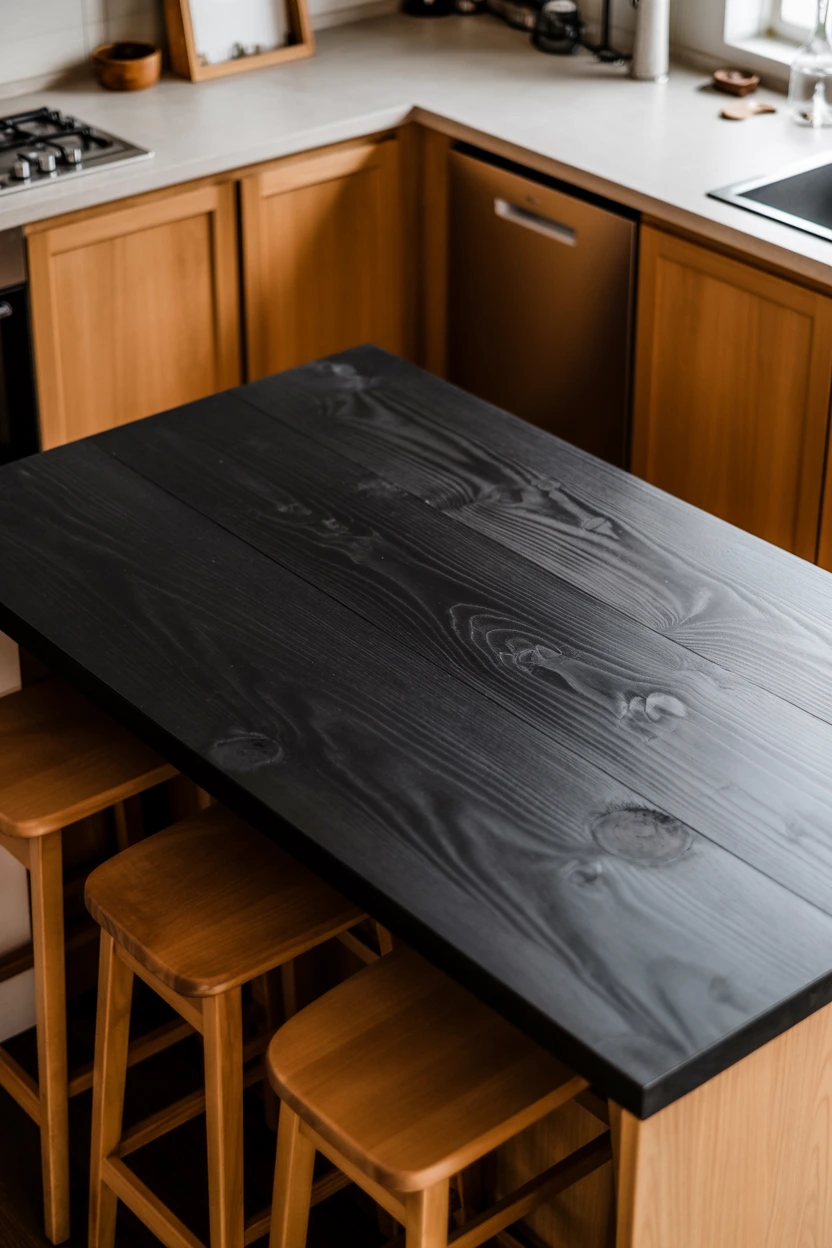
While Japandi design often features light woods, incorporating dark stained wood adds depth and sophistication. This contrast creates a dynamic and visually interesting space. It’s a nod to traditional Japanese interiors.
Use a dark wood, like a stained oak or walnut, for a specific feature. An island, a section of lower cabinets, or open shelving are all great options. This creates a strong focal point.
The key is to balance the dark wood with lighter elements. Pair it with light walls, countertops, and flooring. This ensures the kitchen still feels airy and bright, a core tenet of the Japandi aesthetic kitchen.
This technique adds a touch of drama without being overwhelming. The deep, rich tones of the wood feel grounding and luxurious. It’s a way to make your kitchen design feel more layered and intentional.
11. Minimalist Bar Stools
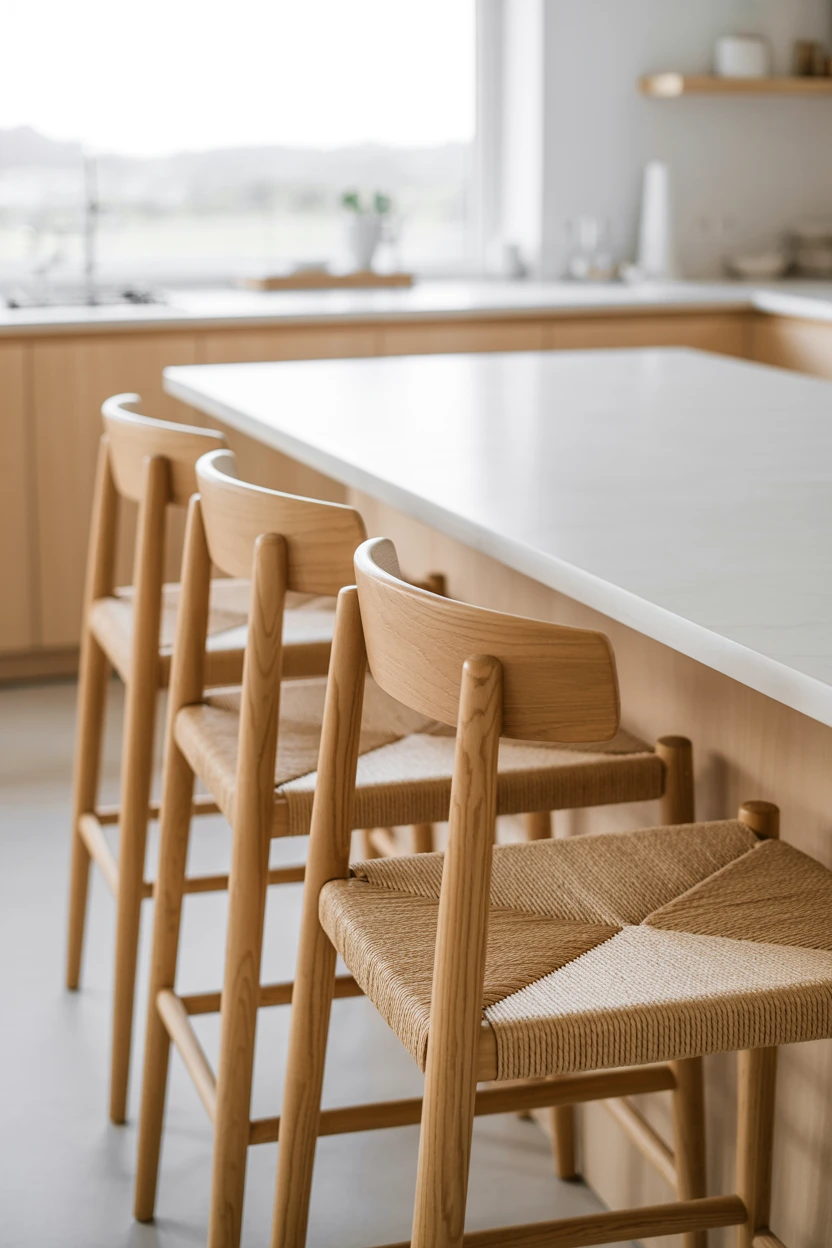
Seating at the kitchen island should be both comfortable and visually light. Look for bar stools with simple silhouettes and natural materials. They should complement the design, not dominate it.
Choose stools made from light wood, like oak or ash. Designs with woven seats, either from paper cord or rattan, add a layer of texture. This detail connects to both Scandinavian and Japanese craft traditions.
The form should be simple and functional. Avoid bulky frames or overly ornate details. The beauty of these stools lies in their elegant construction and honest materials, a perfect match for a Japandi aesthetic kitchen.
Tucking these stools under the counter keeps sightlines clear and maintains the open feel of the room. They provide practical seating while reinforcing the calm, uncluttered nature of the space.
12. Textured Plaster Walls
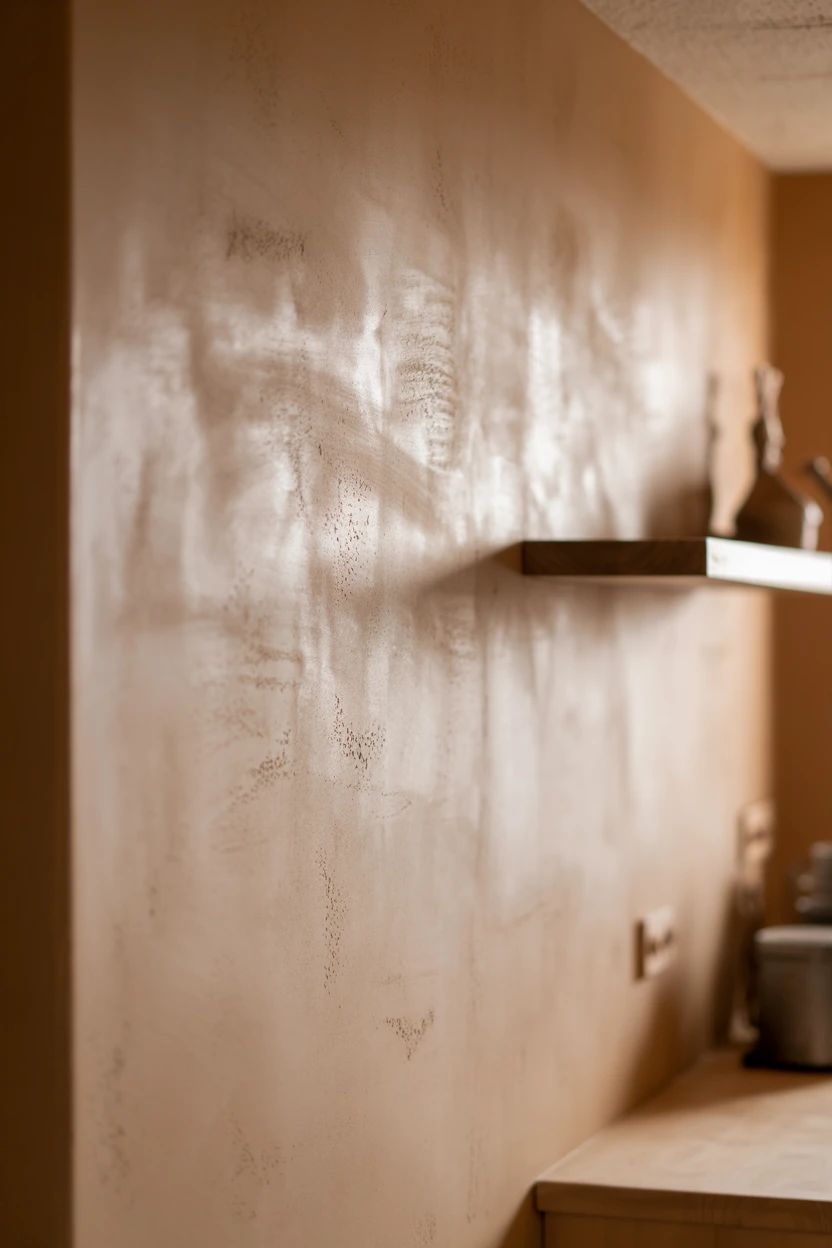
Move beyond standard paint and consider a textured wall finish. Plaster, limewash, or tadelakt adds a soft, chalky texture and depth to your walls. This creates a sense of movement and warmth.
This finish provides a beautiful, slightly imperfect backdrop. It has a softness that drywall and paint cannot replicate. The subtle variations in tone and texture make the walls feel alive.
Using a textured wall is a sophisticated way to enhance your Japandi aesthetic kitchen. It adds an earthy, organic quality that connects the space to nature. It’s a finish that engages the senses of both sight and touch.
Apply this finish to a single feature wall or throughout the entire kitchen for a fully immersive effect. It pairs exceptionally well with natural wood and stone, creating a rich and layered material palette.
Let your home be a quiet conversation between light, texture, and natural form.
13. A Built-In Breakfast Nook
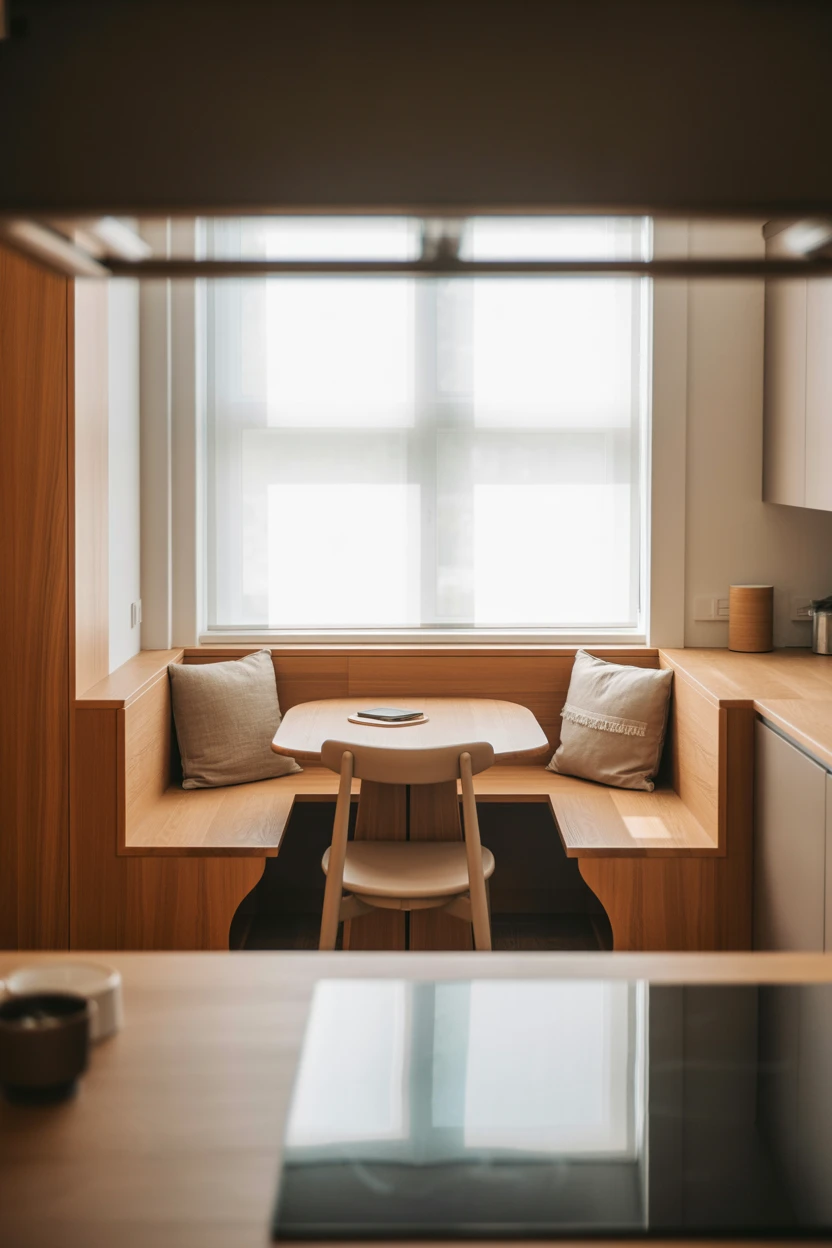
A breakfast nook creates a cozy, dedicated spot for casual meals. Integrating it with built-in seating makes it feel like a natural part of the kitchen architecture. It’s a smart use of corner space.
Design the bench using the same wood as your kitchen cabinets for a cohesive look. Top it with simple, comfortable cushions in a natural fabric like linen or cotton. Keep the design clean and unadorned.
This feature adds a strong element of Scandinavian “hygge,” or coziness. It makes the kitchen more than just a place for cooking; it becomes a place for connection. It’s a wonderful addition to a family-focused Japandi aesthetic kitchen.
Pair the nook with a simple pedestal table to maximize legroom. The result is an inviting corner that encourages you to slow down and enjoy a quiet cup of coffee or a meal with loved ones.
14. Reeded Glass Cabinet Doors
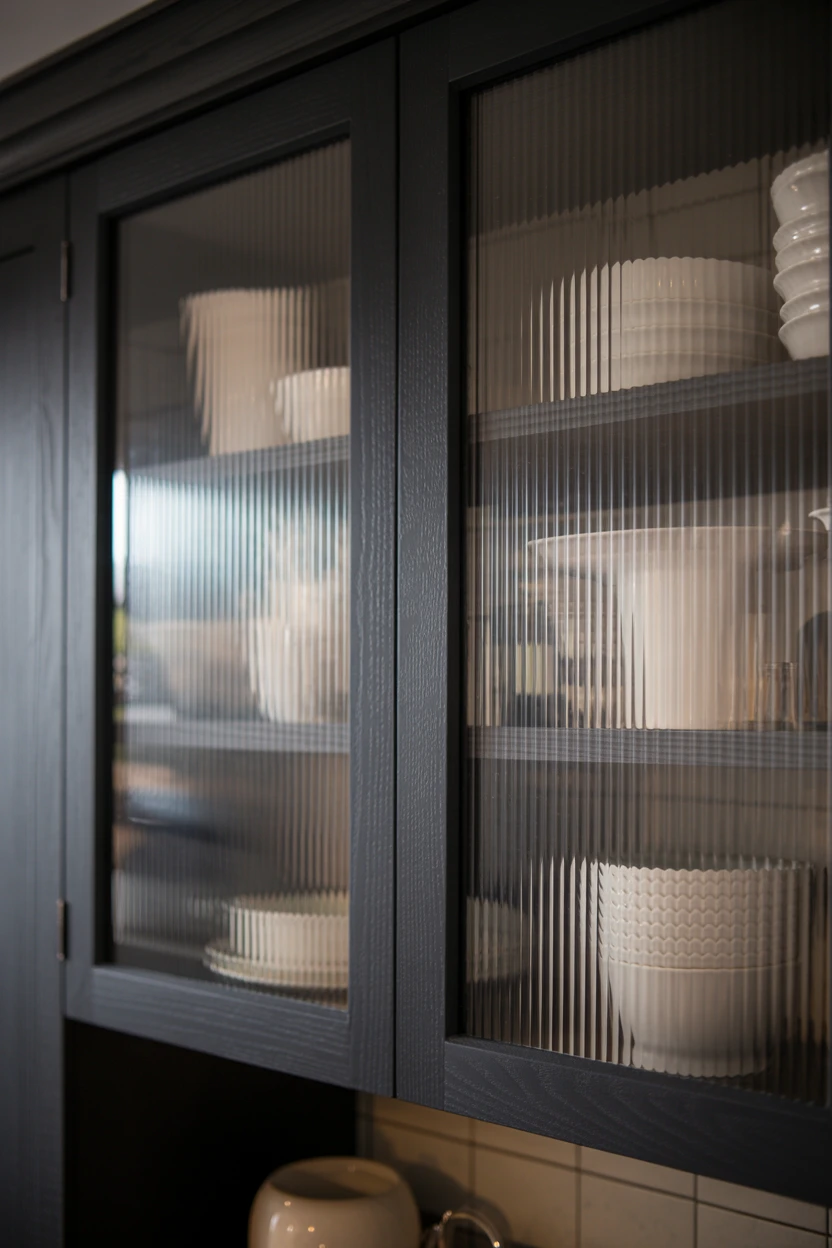
Reeded glass offers a beautiful alternative to solid or clear glass cabinet doors. The vertical grooves in the glass obscure the view while still allowing light to pass through. This provides a sense of openness without revealing clutter.
Use reeded glass on a section of upper cabinets. It’s a great way to break up a long wall of solid doors. It adds a touch of vintage charm while remaining modern and clean.
The textured glass creates an interesting play of light and shadow. It turns the simple shapes of your dishes into an abstract pattern. This detail adds a layer of visual interest to your Japandi aesthetic kitchen.
Frame the glass with either light or dark wood. A dark frame creates a more dramatic, graphic look, while a light wood frame feels softer and more airy. Both options work well within the Japandi style.
15. A Single, Statement Stone Slab Backsplash

For a truly luxurious and seamless look, use a single slab of natural stone for your backsplash. This eliminates grout lines and creates a powerful, uninterrupted visual statement. It’s the epitome of clean design.
Choose a stone with soft, subtle veining, like a light-colored marble or quartzite. The organic pattern of the stone acts as a natural work of art. Continue the same stone from your countertop for maximum impact.
This design choice creates a sophisticated and calming focal point. A full-height stone backsplash makes the kitchen feel grand and custom. It is a defining feature of a high-end Japandi aesthetic kitchen remodel.
Keep the surrounding elements simple to let the stone shine. Pair it with flat-panel cabinets and minimal hardware. This ensures the natural beauty of the material remains the undisputed star of the room.
Functionality is the foundation, but a connection to nature gives a space its soul.
16. Hidden Pantry Entrance
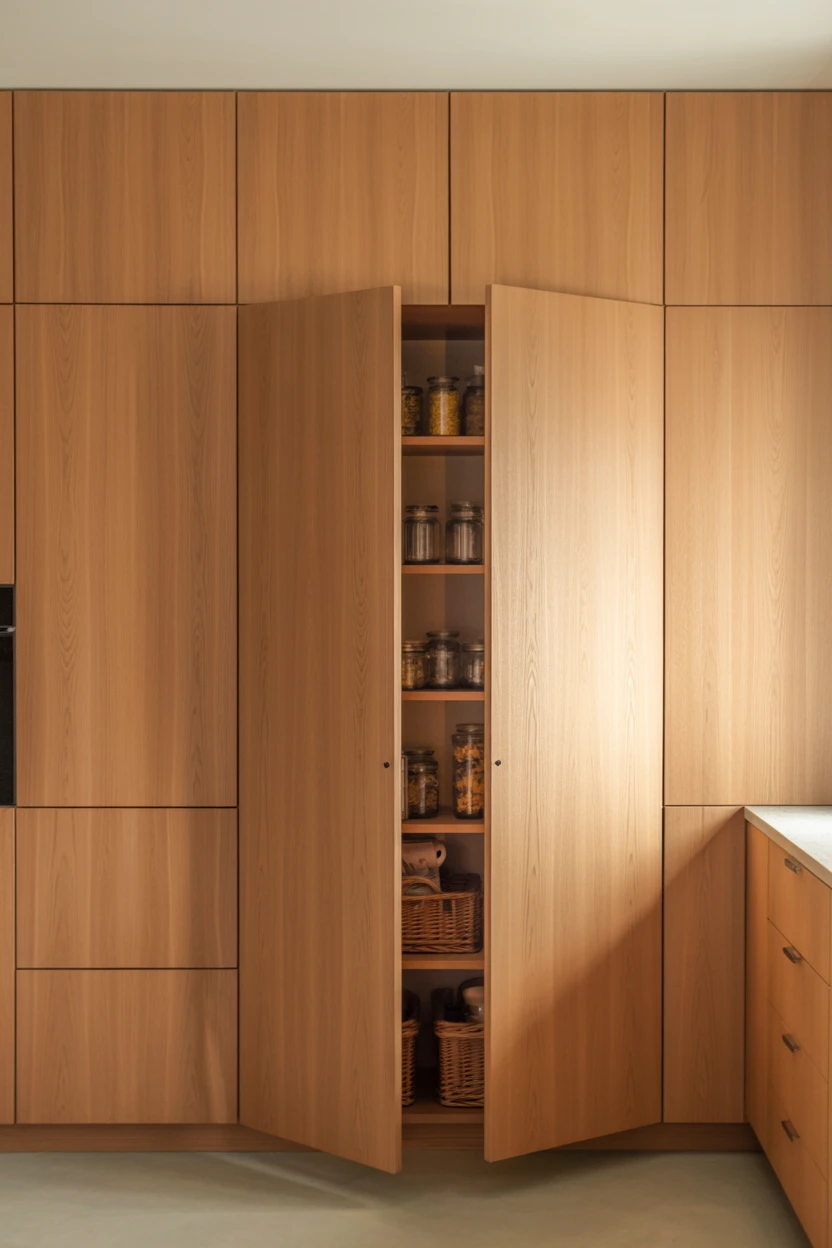
A hidden pantry door maintains the clean, uninterrupted lines of your kitchen. By disguising the entrance as part of the cabinetry, you create a seamless and surprising design element. It’s a perfect blend of form and function.
Work with your cabinet maker to design a “secret” door. It should match the style and material of the surrounding cabinets perfectly. Use a touch-latch system to eliminate the need for a handle.
This idea is ideal for a Japandi aesthetic kitchen, where visual calm is a top priority. It keeps the functional storage area completely separate from the serene living space. Out of sight, out of mind.
Behind the door, a well-organized pantry can house dry goods, extra dishes, and small appliances. This allows you to keep the main kitchen area exceptionally tidy and free of clutter.
17. Concrete Countertops
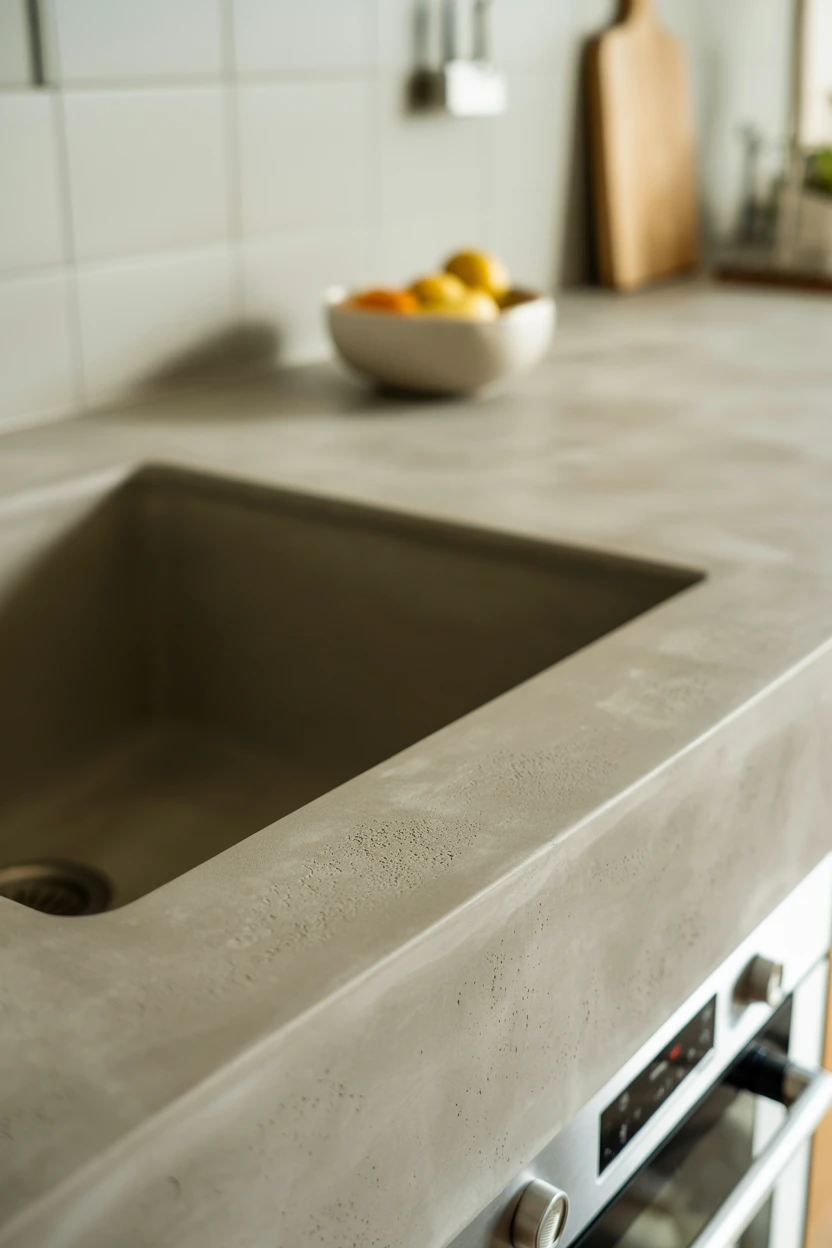
Concrete countertops offer a unique, industrial-chic element. Their raw, matte finish provides a beautiful textural contrast to warm wood cabinets. Each concrete counter is unique, with subtle imperfections that add character.
Choose a light to medium gray concrete to keep the space feeling bright. The material can be poured in place or pre-cast to your exact specifications. A high-quality sealer is essential to protect it from stains.
The solid, earthy feel of concrete is a great fit for a Japandi aesthetic kitchen. It is an honest material that is both durable and beautiful. It bridges the gap between modern minimalism and rustic charm.
Over time, concrete will develop a patina, a subtle change in color and texture that tells the story of its use. This evolving character aligns perfectly with the wabi-sabi appreciation for aging and imperfection.
18. Rattan and Cane Details
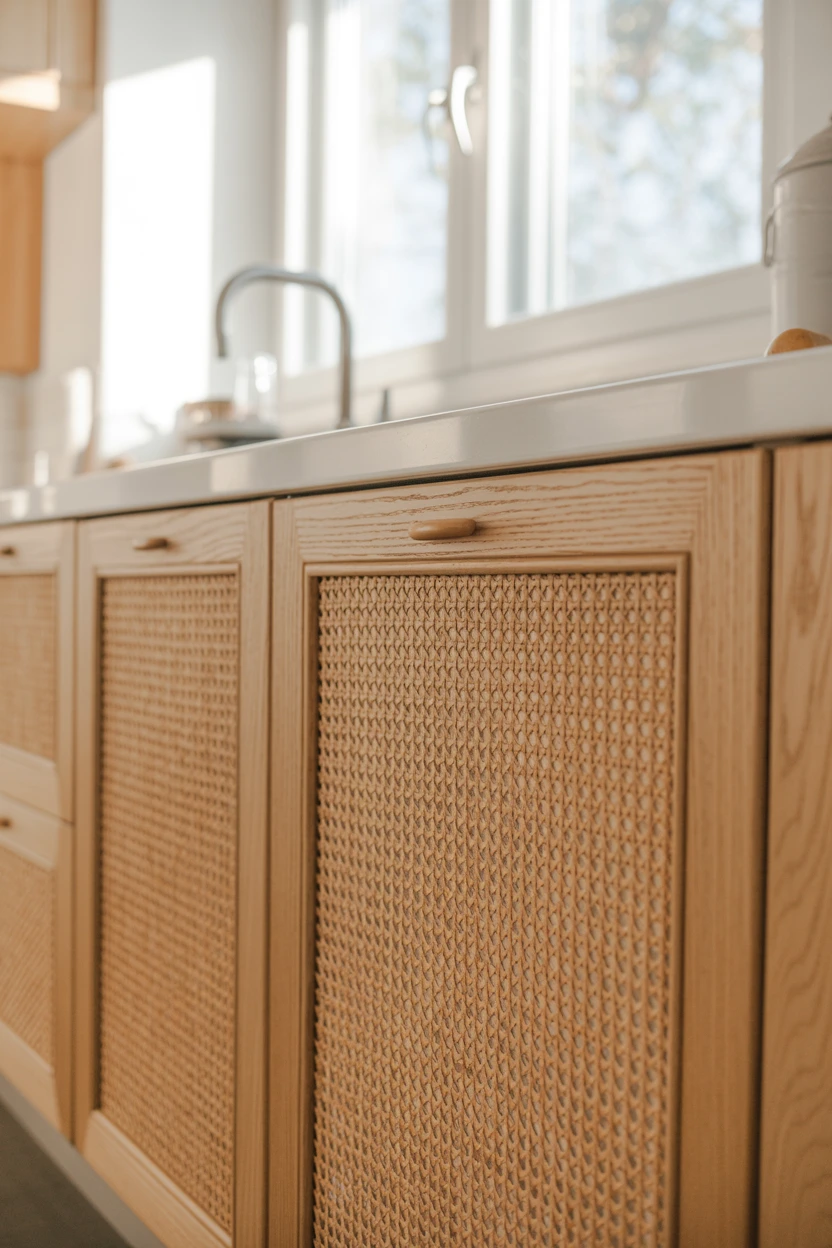
Incorporating rattan or cane webbing adds a layer of soft, natural texture. It’s a lightweight material that feels both retro and modern. It can be used in cabinet fronts, on pantry doors, or in seating.
Using cane on select cabinet doors can break up the monotony of solid wood. The semi-transparent nature of the weave adds visual interest. It also provides ventilation, making it a great choice for cabinets storing produce.
These natural fibers bring a touch of bohemian warmth to the clean lines of a Japandi aesthetic kitchen. It’s a small detail that can make a big impact, making the space feel more relaxed and inviting.
Pair rattan with light woods and neutral colors. The combination is effortlessly chic and timeless. It’s a nod to classic Scandinavian design while feeling perfectly at home in a Japanese-inspired space.
A truly calm home is one where every object has a place and every detail has a purpose.
19. A Minimalist Range Hood
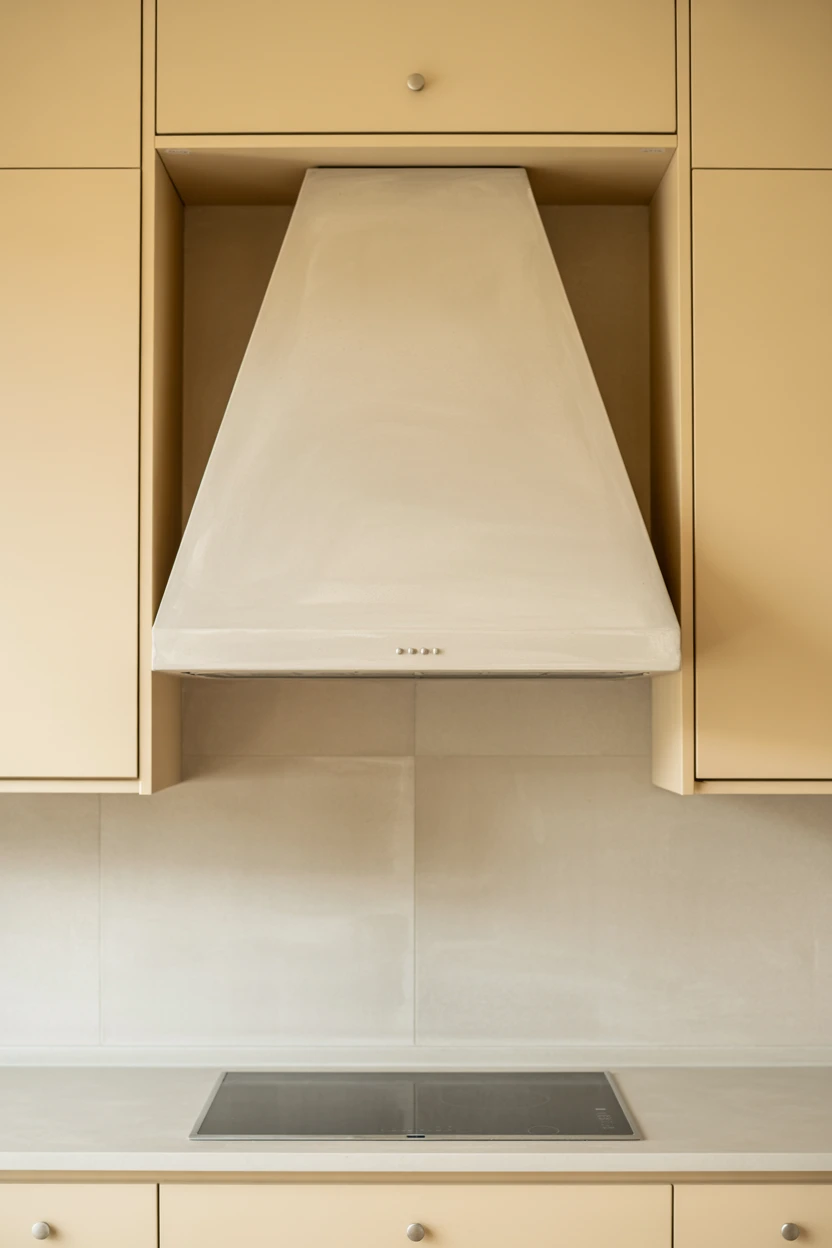
A bulky, stainless steel range hood can disrupt the visual calm of a kitchen. Instead, opt for a minimalist design that blends into its surroundings. This keeps the focus on the clean lines and beautiful materials.
One option is to cover the hood with the same material as your walls, such as plaster or paint. Another is to box it in with panels that match your cabinetry. Both methods make the hood feel like part of the architecture.
This approach is essential for achieving a truly cohesive Japandi aesthetic kitchen. It prioritizes a calm, unified look over showcasing appliances. The function is there, but it doesn’t shout for attention.
Some minimalist hoods are even designed to retract into the countertop or ceiling when not in use. These innovative solutions are perfect for islands or open-concept spaces where maintaining clear sightlines is key.
20. Plants as Living Decor
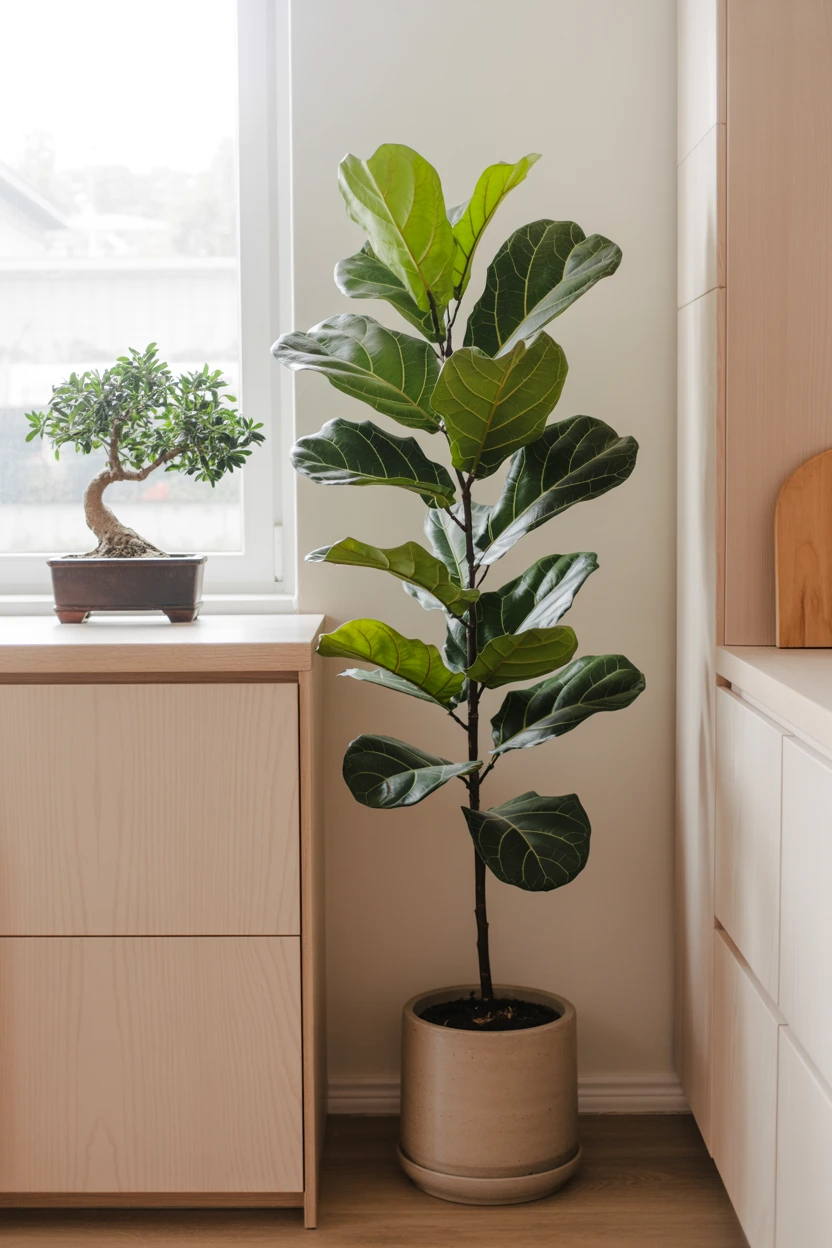
Plants bring life, color, and an organic element into the kitchen. They are a simple and effective way to reinforce the connection to nature that is so important in Japandi design. They also help purify the air.
Choose plants with sculptural forms and interesting leaves. A fiddle leaf fig, a snake plant, or a delicate bonsai tree all work well. Place them in simple ceramic or terracotta pots that complement your color scheme.
Use plants to style open shelves, fill an empty corner, or bring life to your windowsill. A thriving plant makes a space feel cared for and vibrant. This is a key part of creating a welcoming Japandi aesthetic kitchen.
A small collection of fresh herbs in pots is another great option. They are both beautiful and functional, providing fresh ingredients for your cooking. The sight and smell of fresh herbs add to the sensory experience of the kitchen.
21. Large Format Tile Flooring
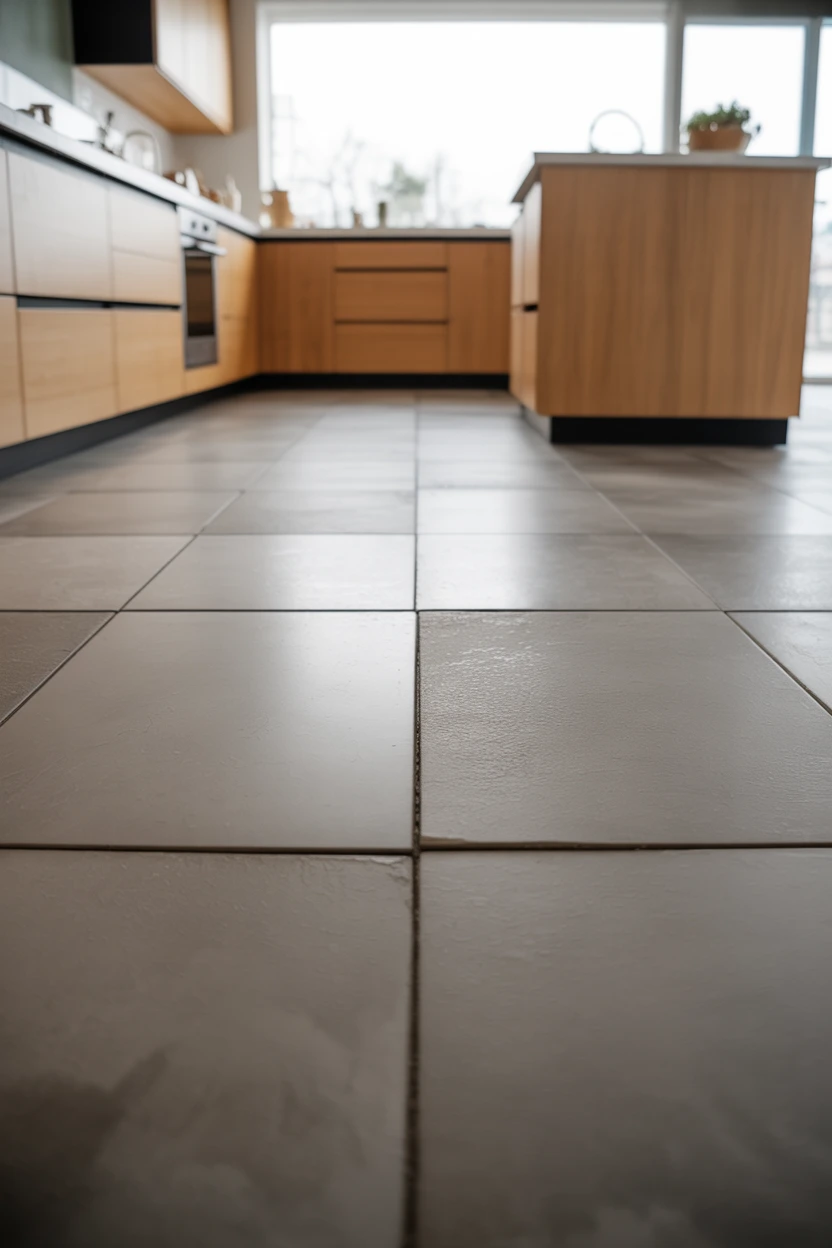
If wood flooring isn’t practical for your kitchen, large format tiles are an excellent alternative. Using very large tiles (such as 24×48 inches) with minimal, color-matched grout lines creates a clean, continuous surface.
Choose tiles that mimic the look of natural materials like concrete or limestone. A matte finish is preferable to a high-gloss one, as it feels more organic and understated. Neutral colors like gray, beige, or charcoal work best.
This type of flooring makes the kitchen feel larger and less busy. The fewer grout lines there are, the more seamless and calming the floor appears. This is a modern approach that fits perfectly with the Japandi aesthetic kitchen.
For added comfort, consider installing radiant floor heating beneath the tiles. This adds a touch of Scandinavian hygge, making the cool, solid surface feel wonderfully warm underfoot on chilly mornings.
Embrace the beauty of empty space; it gives the important things room to breathe.
22. Handleless, Flat-Panel Cabinets
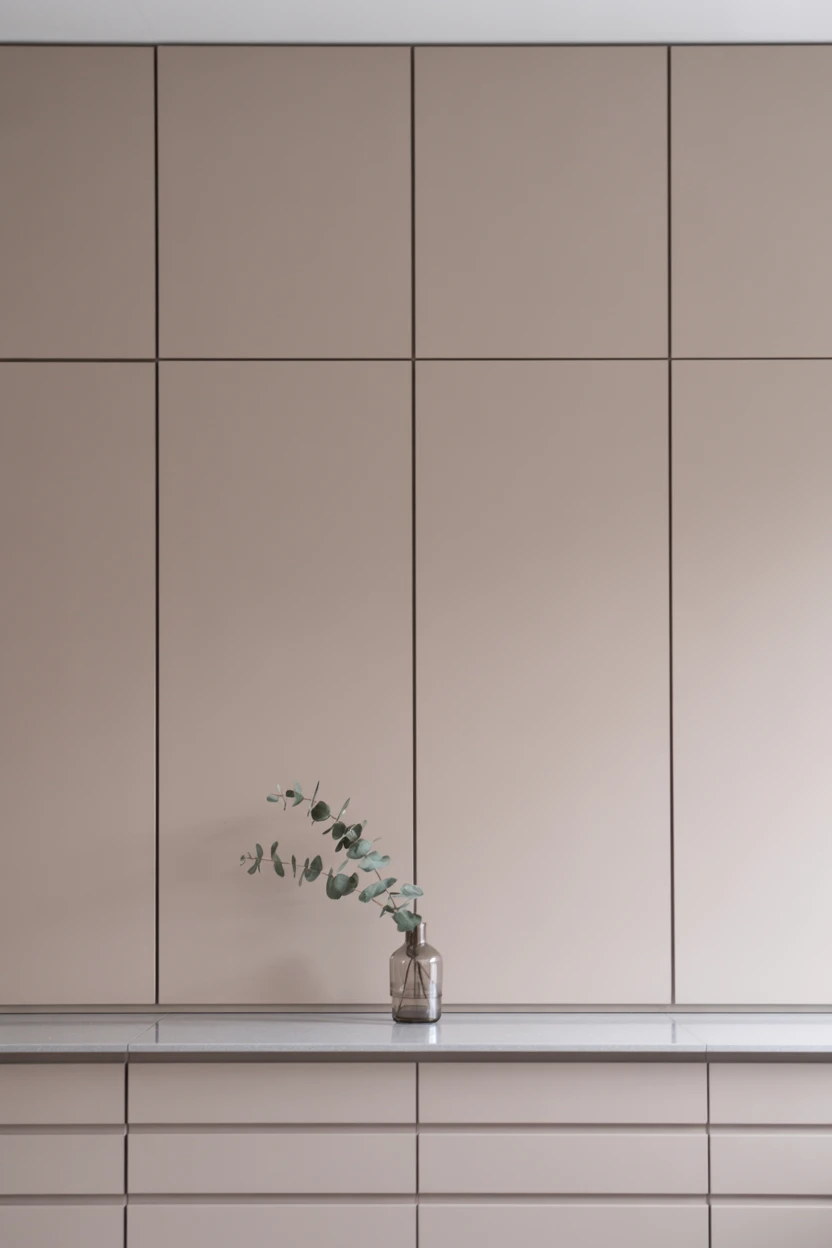
For the ultimate in minimalist design, choose flat-panel cabinets with no visible hardware. This creates a completely seamless and uncluttered look. The focus remains on the material and form of the cabinetry itself.
These cabinets typically use integrated channel pulls or push-to-open mechanisms. The result is a wall of clean, uninterrupted surfaces. This style is deeply rooted in both modern Scandinavian and Japanese design principles.
This choice is fundamental to creating a calm Japandi aesthetic kitchen. By removing the visual “noise” of hardware, you create a space that feels more restful and orderly. The simplicity is both beautiful and highly functional.
This style works well in any finish, from natural wood to a matte lacquer. In a smaller kitchen, using a light color for your handleless cabinets can make the space feel much larger and more open.
23. A Thoughtfully Placed Art Piece
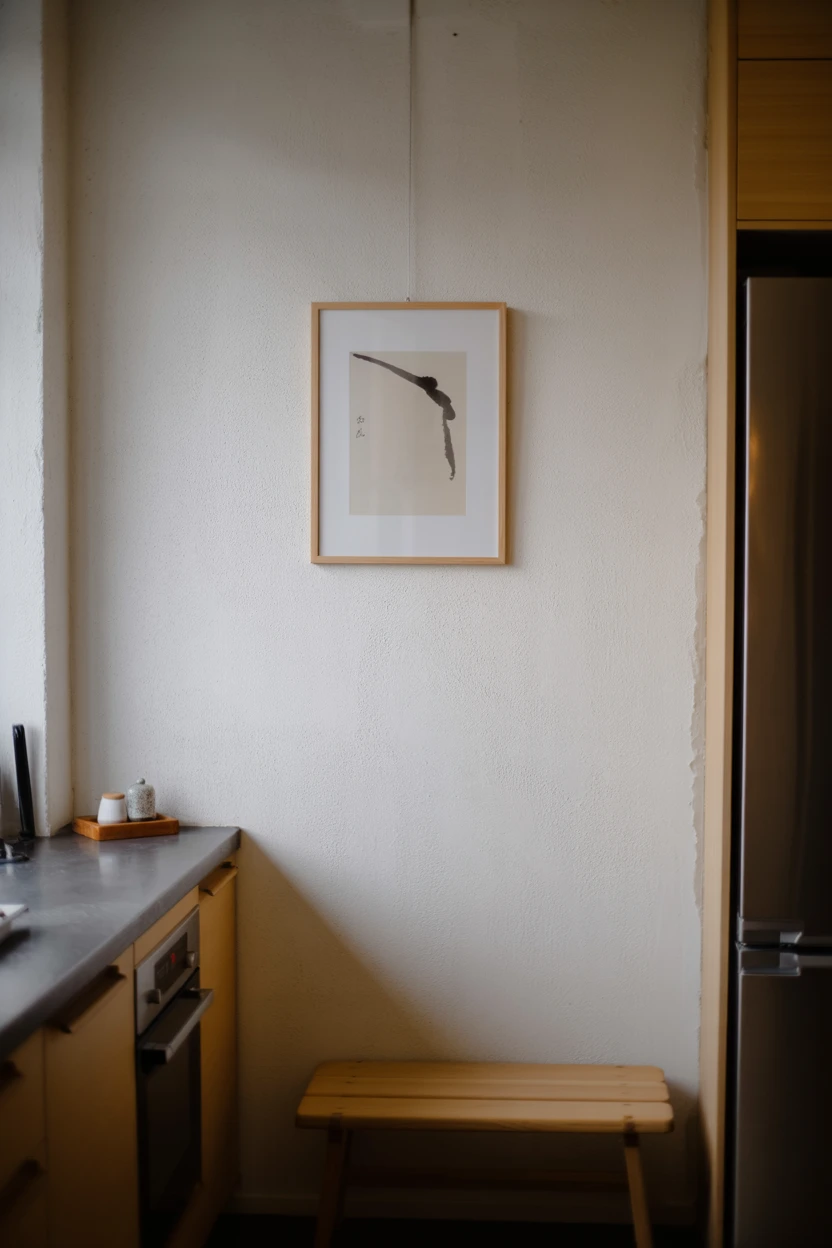
A kitchen doesn’t have to be purely functional. Adding a piece of art can bring a personal, soulful touch to the space. The key is to choose one piece and give it room to breathe.
Select a piece that complements the calm, natural feel of the room. A simple abstract painting, a black and white photograph of a natural landscape, or a piece of textile art could all work beautifully. Choose a simple, high-quality frame.
Find a small, dedicated wall space for the art. Don’t crowd it with other items. This intentional placement turns the art into a quiet focal point, inviting a moment of reflection. This is a core idea in a Japandi aesthetic kitchen.
This small detail can elevate the entire room. It shows that the space is more than just a place for work; it’s a living space designed with care and intention. It’s a final, personal layer that makes the kitchen truly yours.
24. Layered, Dimmable Lighting
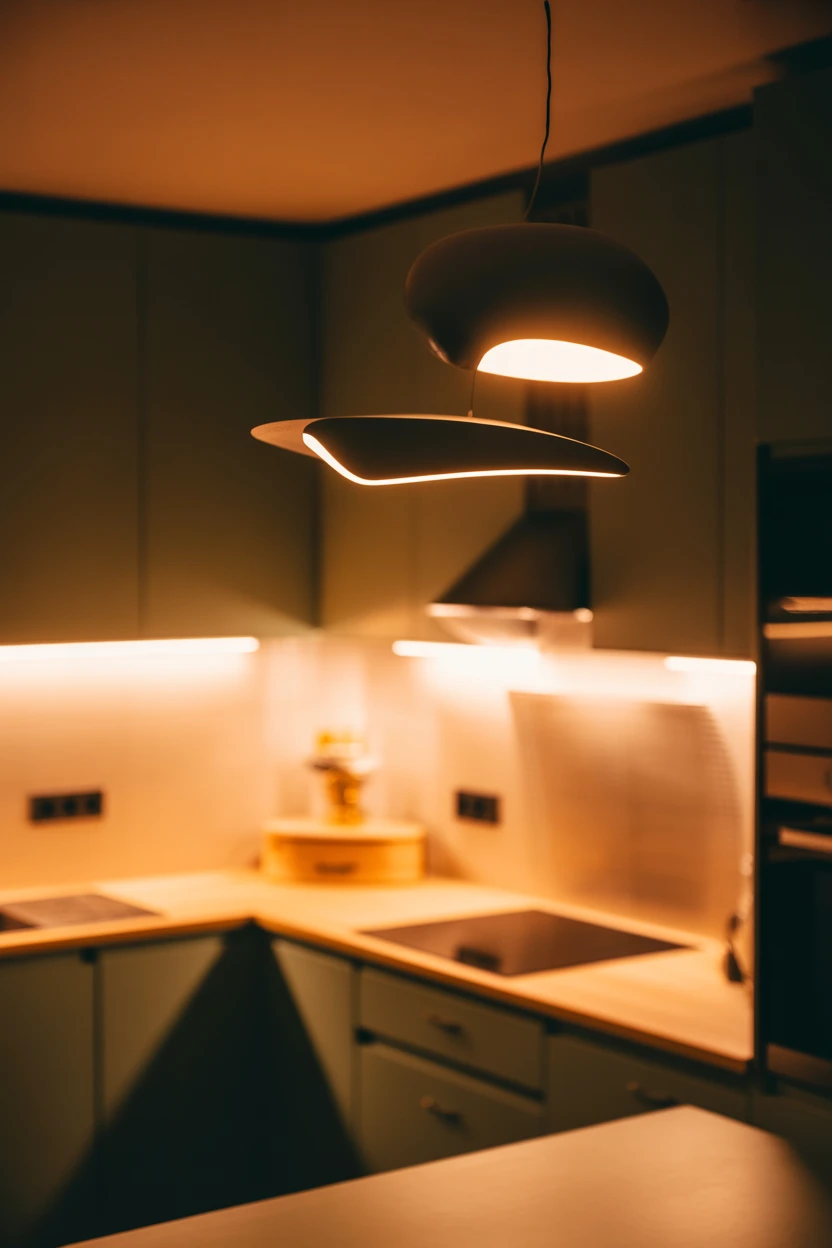
A successful lighting plan includes multiple layers that can be controlled independently. This allows you to adjust the mood of the kitchen for different activities, from bright task lighting for cooking to a soft, ambient glow for relaxing.
Start with recessed ceiling lights for general illumination. Add task lighting under the upper cabinets to light your work surfaces. Finally, include decorative or ambient lighting, like a pendant over the island or sconces on a wall.
Putting all of these lights on dimmer switches is crucial. This gives you complete control over the atmosphere. A bright, functional workspace can transform into a cozy, intimate setting with the turn of a dial.
This thoughtful approach to lighting is vital for a successful Japandi aesthetic kitchen. It supports the room’s functionality while also enhancing its role as a calm and welcoming heart of the home, day or night.
Conclusion
Remodeling your kitchen is an opportunity to create a space that truly supports your well-being. By focusing on the core principles of Japandi design, you can build a room that is both beautiful and deeply calming. It’s about choosing natural materials, embracing simplicity, and making sure every element has a purpose.
Remember that a Japandi aesthetic kitchen is not about following a strict set of rules. It is about creating a feeling of balance, warmth, and tranquility. Use these ideas as a starting point to design a kitchen that feels personal to you and brings a sense of peace to your daily routines.
The result will be more than just a stunning kitchen. It will be a thoughtfully crafted space that feels clean, organized, and connected to nature. It will be the quiet, harmonious heart of your home that you will love for many years to come.